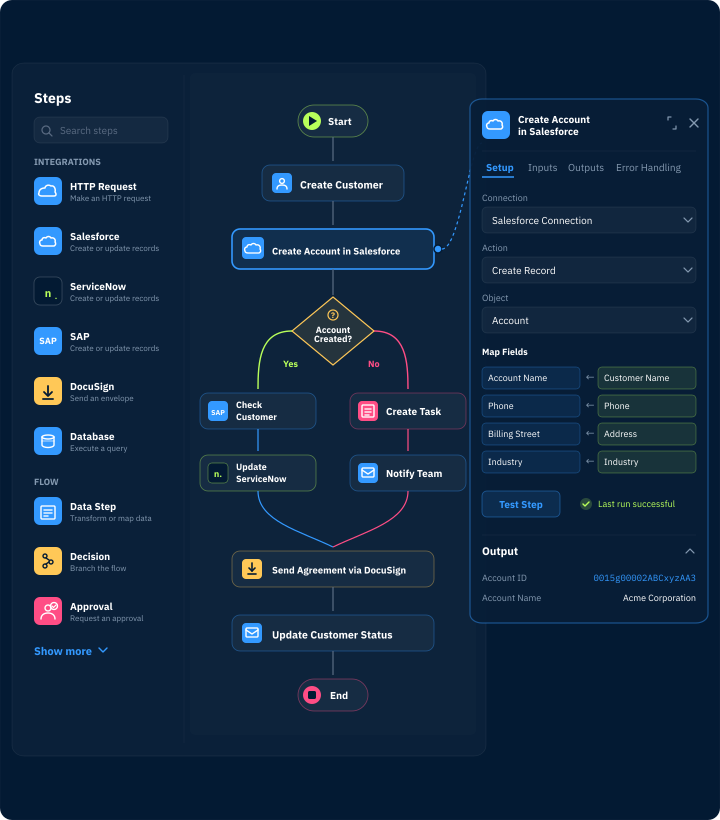
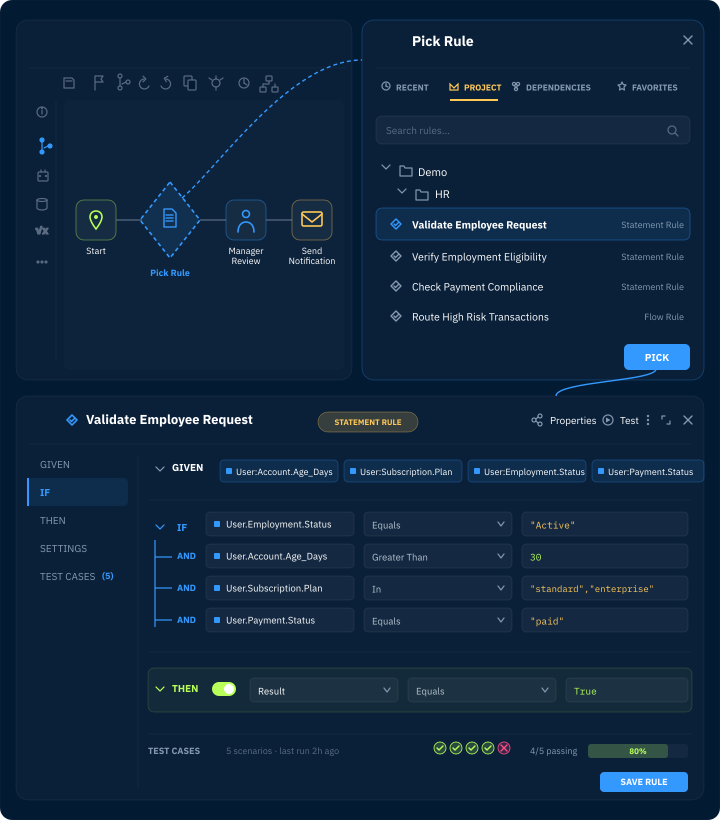
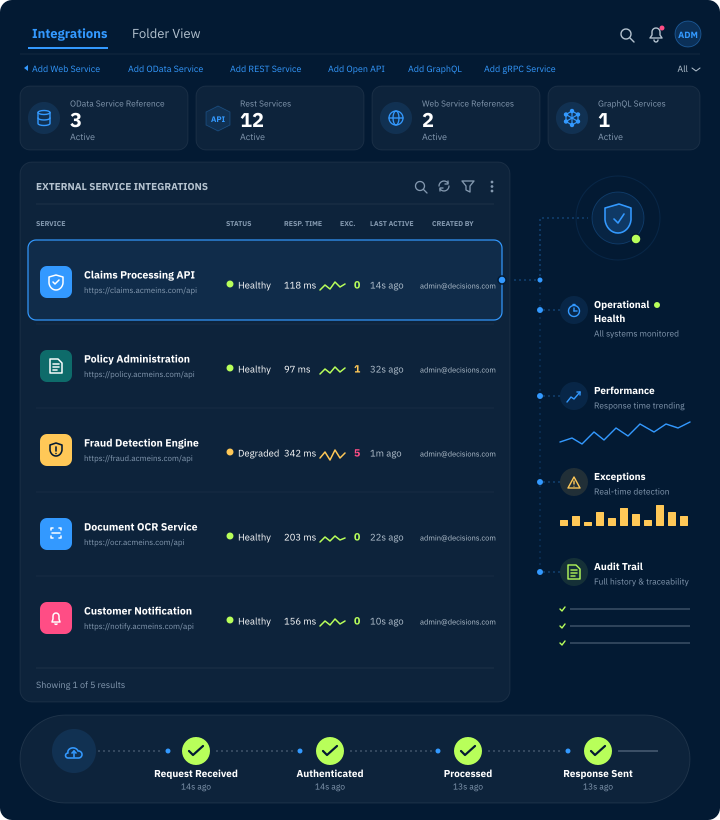
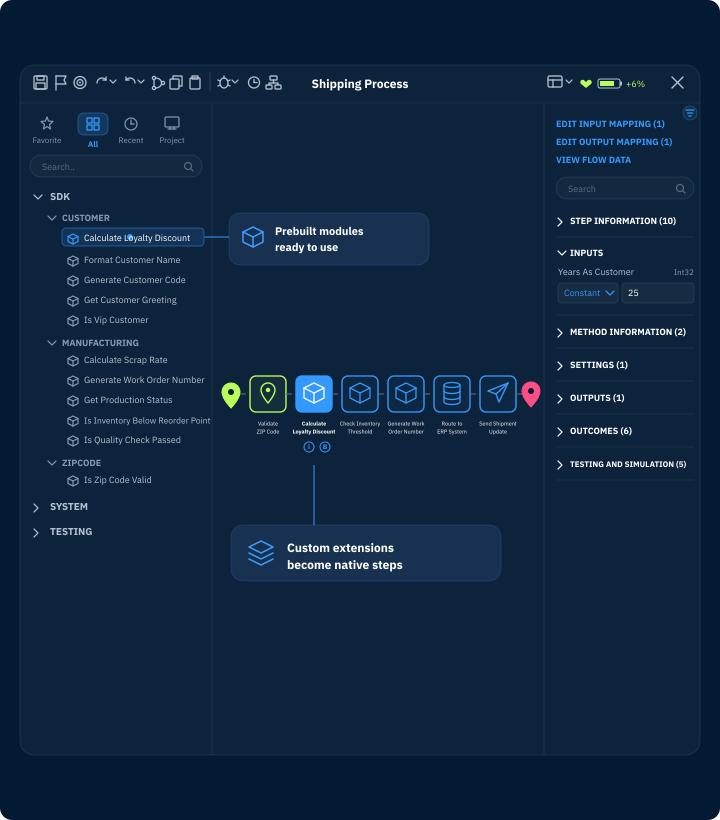
Decisions gives you one low-code platform to connect, orchestrate, and control data, processes, and AI agents across your entire tech stack—visually, flexibly, and at scale.

Most enterprises have plenty of integrations. The challenge is making those connections work together across people, systems, policies, and AI-enabled actions.

One-off integrations multiply fast. Each new API, service, queue, or database connection adds maintenance, dependencies, and hidden failure points.

Data may move between systems, but the rules that decide what happens next often live in code, spreadsheets, tickets, or tribal knowledge.

Decisions does more than move data. It coordinates the workflows, rules, approvals, and actions that determine what happens after systems connect.

Apply decision logic directly to integrated processes, so policies, validations, routing, and exceptions are enforced consistently across systems.

Business and IT teams can design visually while maintaining permissions, versioning, testing, governance, and deployment oversight.
The handoff is where things get interesting. See what happens when one process has to move across multiple systems.
Decisions combines integration, rules, workflow, and monitoring so teams can build reusable connections and orchestrate end-to-end processes from a single platform.

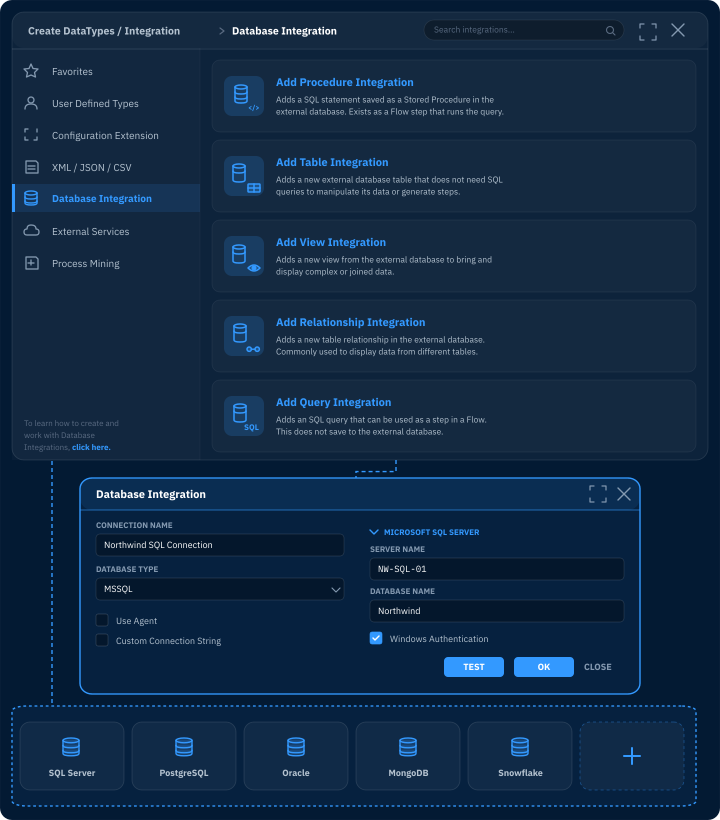
Integrate with REST, SOAP, SQL, JSON, XML, CSV, databases, webhooks, message queues, enterprise applications, and custom services.
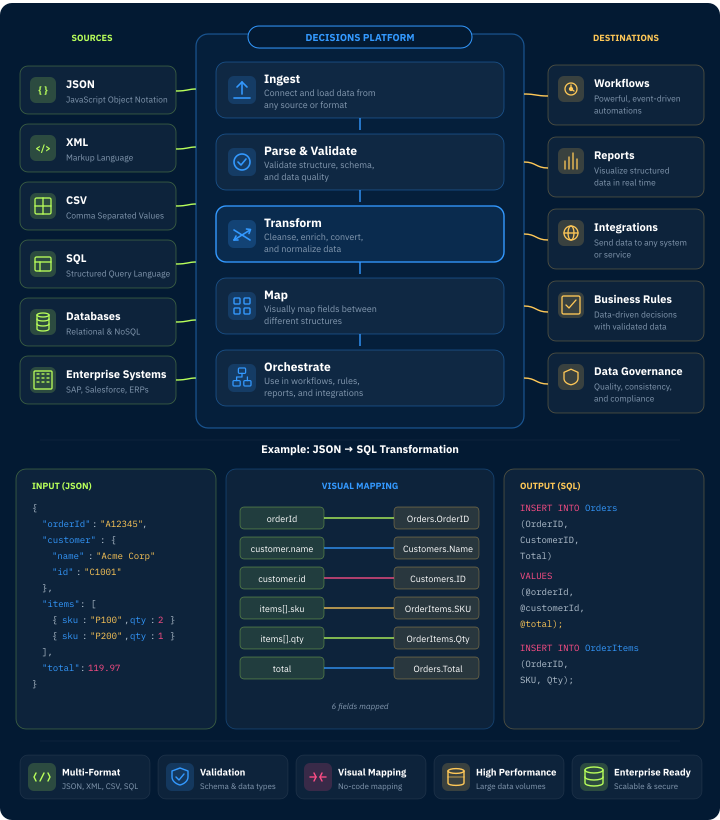


Connect faster with out-of-the-box integrations across systems you already use. From core platforms and databases to RESTful APIs, RPA tools, and messaging systems, Decisions makes it easy to unify your tech stack.
Categories
 Access
 Active Directory
 Active MQ
 Adobe Sign
 Amazon Cloud Watch
 Amazon DynamoDB
 Amazon EC2
 Amazon Elastic Load Balancer
 Amazon Kinesis
 Amazon Lambda
 Amazon Redshift
 Amazon S3
 Amazon Sage Maker
 Amazon SES
 Amazon SNS
 Amazon SQS
 Anthropic
 Apache Kafka
 AWS
AWS AWS Bedrock
 AWS Machine Learning Tools
 Azure
Azure Azure Key Vault
 Azure Monitor
 Azure Service Bus
 Azure Storage Blob
 Azure Synapse
 Box
Box Data Dog
 Datamatics TruBot
 Datamatics TruCap
 Discord
 Docker
 Document360
 DocuSign
 Dropbox
 Entra ID
 Equifax
 Experian
 Facebook
 FHIR
FHIR Foreign Exchange
 FTP/FTPS
 Google Cloud
 Google Drive
 Google Gemini
 Google Mail
 Google Translate
 Google Vertex
 Grafana
 Grafana Loki
 GraphQL
 HL7
HL7 HubSpot
 IBM MQ
 IBM ODBC DB2
 ICal
ICal iFrame
 Jira
Jira JumpCloud
 Microsoft 365
 Microsoft 365 Exchange
 Microsoft Excel
 Microsoft One Drive
 Microsoft Sharepoint
 Microsoft SQL Server
 Microsoft Teams
 Microsoft Word
 Mongo DB
 MS MQ
MS MQ Netezza IBM
 Okta
Okta Open AI
 OpenID
 Oracle
 PGP
PGP Plaid
Plaid PostgreSQL
 Postman
 Powershell
 Python
 QR Codes
 R
R Rabbit MQ
 RedisRedis Queue
 Remedy
 Salesforce
 SAML
SAML SAP SQL Anywhere
 Slack
Slack SMTP
SMTP Snowflake
 Solace MQSolace PubSub+
 SSH
SSH Swagger
 Symantec
 TelephonyUpTrace
 USPS
USPS X/Twitter
 X12
X12 Zoom
ZoomConnect APIs, databases, events, services, and AI tools in governed workflows that move work across your business.

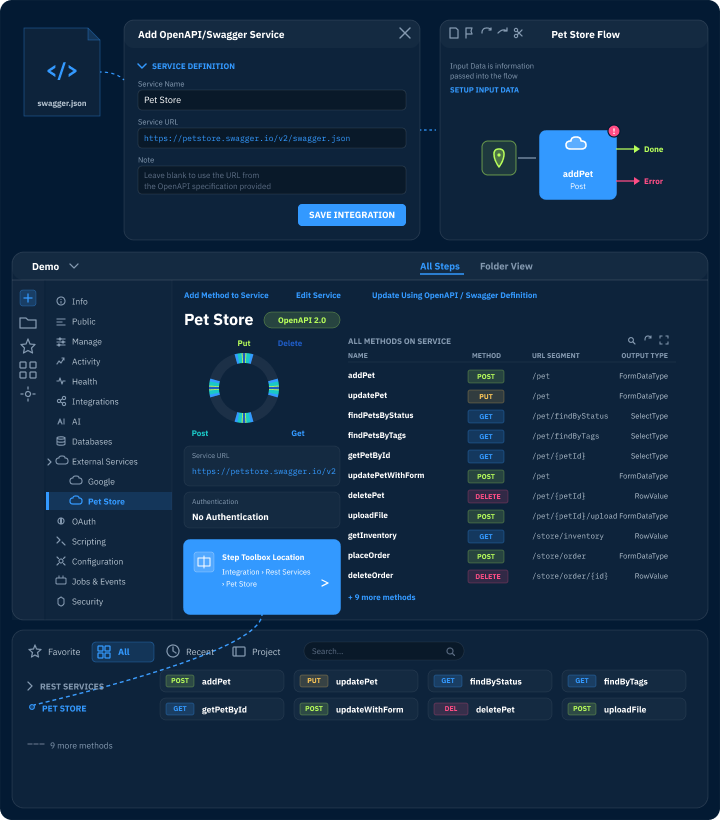
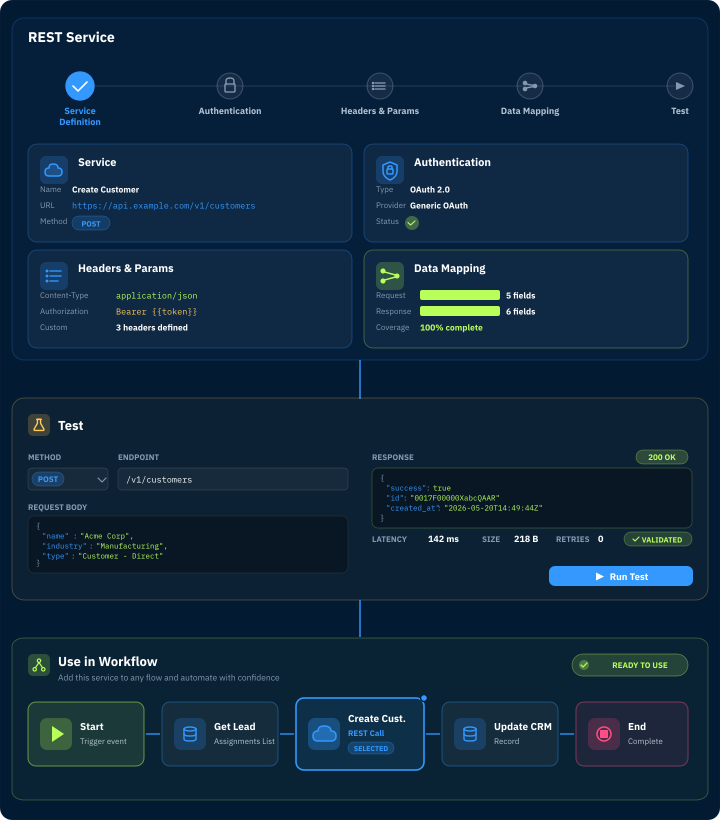
Integrate with any system that exposes a REST or SOAP API. Configure authentication, headers, and data mapping—all from a visual interface.


View the Decisions Integrations data sheet to see how Decisions connects applications, databases, APIs, and legacy systems—helping teams reduce silos, enforce data integrity, and orchestrate work across the enterprise.
An enterprise integration platform connects applications, APIs, databases, data sources, and services so information and actions can move between systems. Decisions also coordinates the workflows, rules, and actions that happen across those connections.
Integration connects systems so they can communicate. Orchestration coordinates the work that happens across those systems, including decisions, approvals, exceptions, and other actions.

See how Decisions helps you unify applications, data, APIs, services, and AI tools through governed orchestration from one platform.

When integrations run across cloud, on-prem, legacy, and AI systems, it becomes harder to see failures, enforce policies, and prove what happened.

Connect cloud, hybrid, on-prem, legacy, and modern systems without forcing the business to rebuild around a single application architecture.

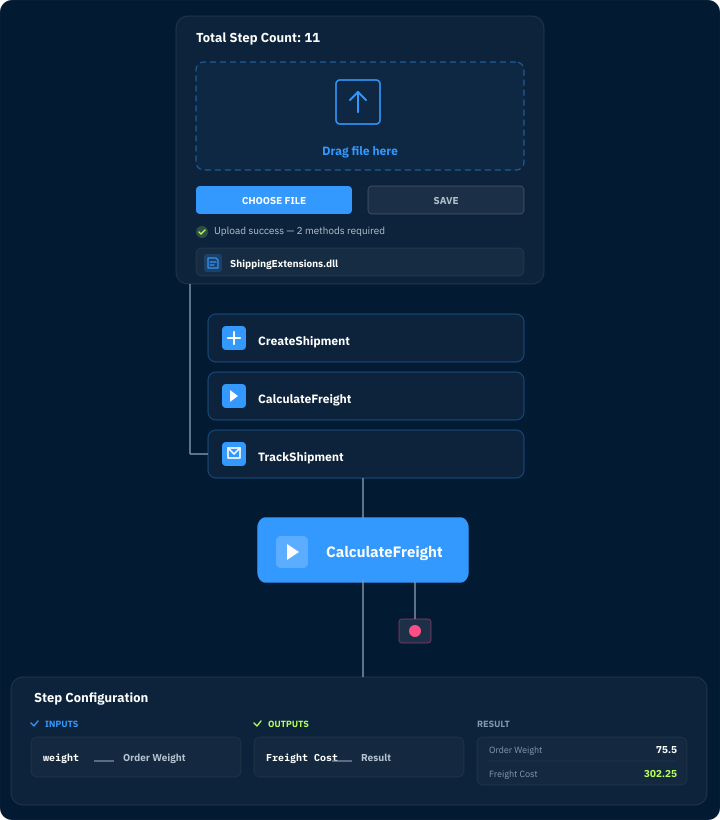
Create integration steps, data mappings, rules, and workflows once, then reuse them across applications, departments, and process variations.

Capture what ran, what changed, who acted, which rules fired, and how data moved across each connected system.
Decisions connects REST and SOAP services, databases, webhooks, message queues, enterprise applications, cloud services, AI platforms, identity providers, and custom systems through prebuilt modules and SDK support.
Yes. Decisions can connect legacy and modern systems through APIs, databases, services, messaging, and custom connectors, allowing organizations to extend existing technology without replacing it.
Yes. Decisions flows and other platform elements can be exposed as REST services so external applications can send information to Decisions and receive results after workflow or rule logic executes.