Build and manage business workflows with Decisions’ visual design tools, business rules, and integrations. Coordinate tasks, approvals, exceptions, and AI actions across systems, with visibility and governance built in.


Work moves across tools, inboxes, spreadsheets, and portals with no single place to manage it.

Business rules are scattered across workflows and custom code, making changes harder to manage consistently.

Teams lose time routing requests, chasing approvals, and rekeying data between systems.
Work rarely follows a straight line. Decisions coordinates tasks, systems, and decisions in one workflow automation platform, using business rules to guide routing, approvals, and exceptions.

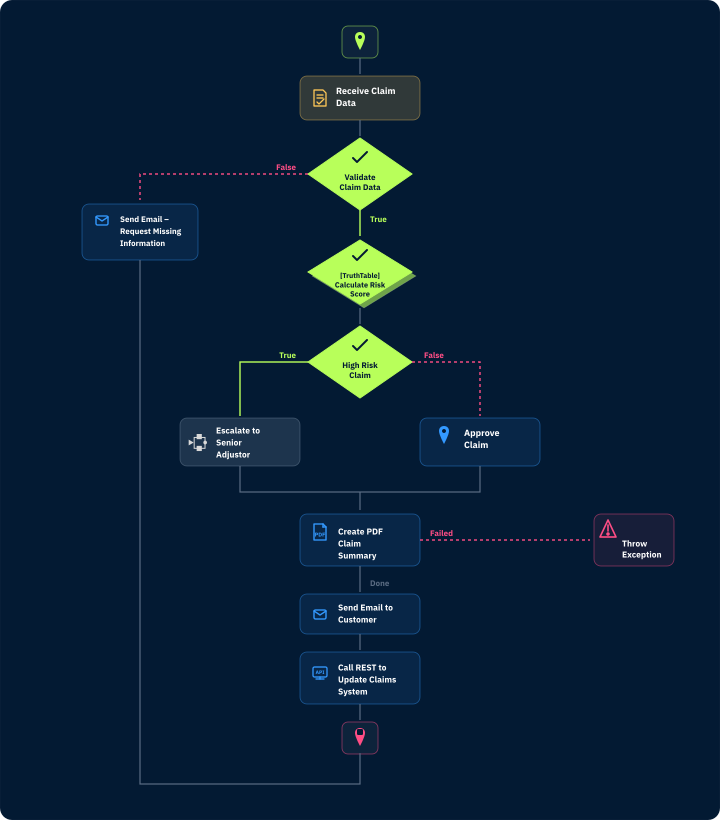
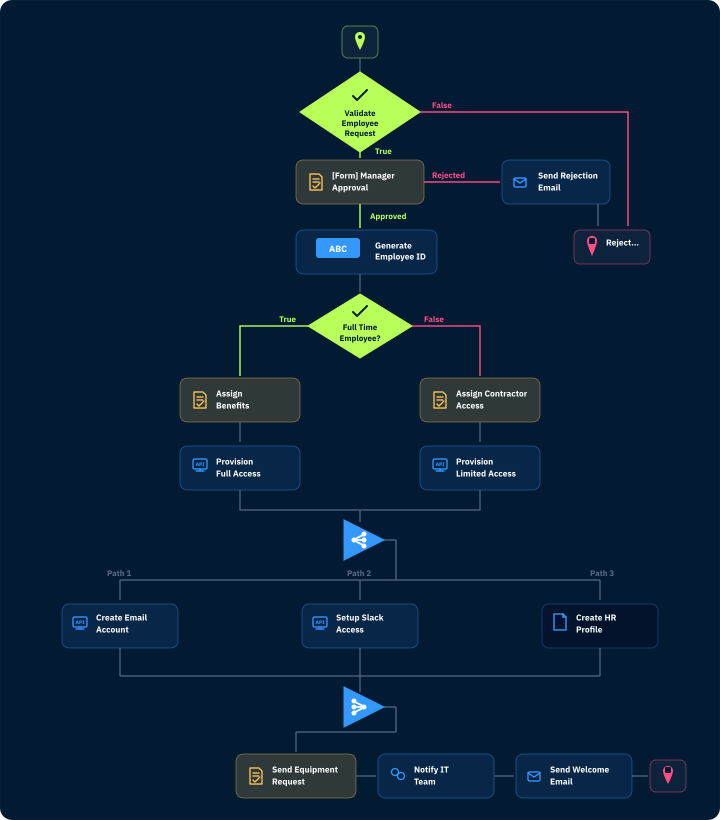
Design workflows visually as a sequence of steps that reflects how work gets done, from intake to completion.

Apply business rules to determine routing, approval requirements, exception handling, and the next action.
Bring us your toughest workflow problem. We’ll give you 5 tailored recommendations you can take back to your team.
Build workflows from scratch without code—or accelerate design with thousands of prebuilt actions and interactions.

Design workflows without code as step-based flows that define how work moves from start to finish.


“Decisions enables us to deliver completely visual workflow and business rules process management solutions for any business.”

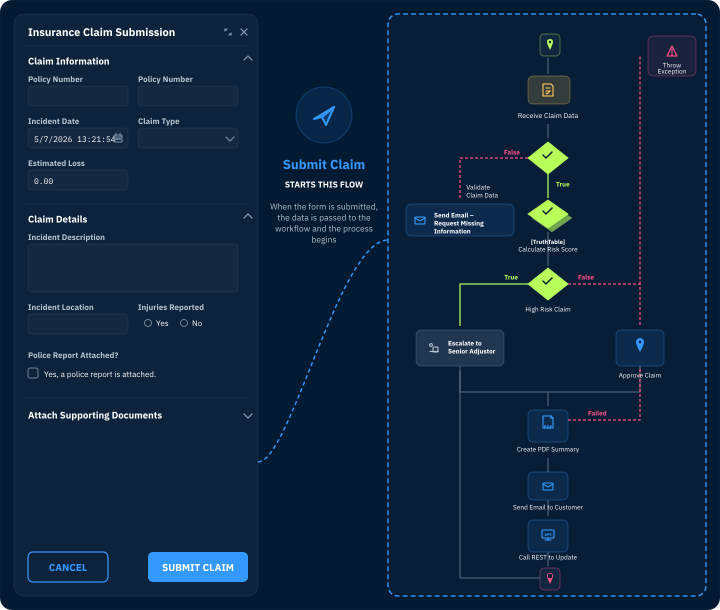
Use Decisions Form Designer to collect the information a process needs and pass it directly into the workflow. Route submissions, request approvals, and trigger the next steps without relying on disconnected forms and manual follow-up.

Build, change, and scale workflows faster using visual tools, reusable steps, integrations, and rules.

Control routing, approvals, exceptions, and outcomes with rules that are easier to update, govern, and audit.

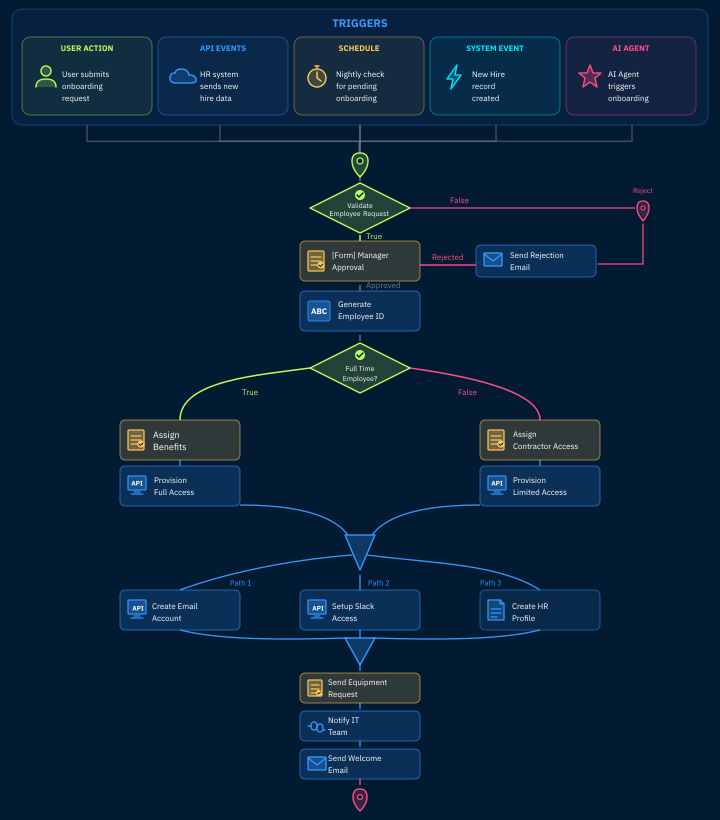
Coordinate tasks, systems, data, and agents across end-to-end work.



A workflow automation platform uses software to coordinate tasks, decisions, information, and handoffs within a business process. It can route approvals, connect applications, trigger actions, and track progress. Decisions combines those capabilities with visual design, business rules, orchestration, and governance.
Decisions supports approval workflows, service requests, onboarding, case workflows, billing processes, exception handling, and system orchestration. Teams can combine human tasks and automated actions according to the requirements of the process.

Design, orchestrate, and improve workflows with rules, AI, and process intelligence built in—so work moves faster and stays easier to control.

Leaders can't easily see where work stands, why it stalled, or what needs attention.

As AI agents enter workflows, organizations need control over what they can do, when, and why.

When processes break or fall outside standard rules, teams rely on manual workarounds that slow resolution and increase risk.

Update workflow logic and paths as requirements change, with testing and deployment controls.

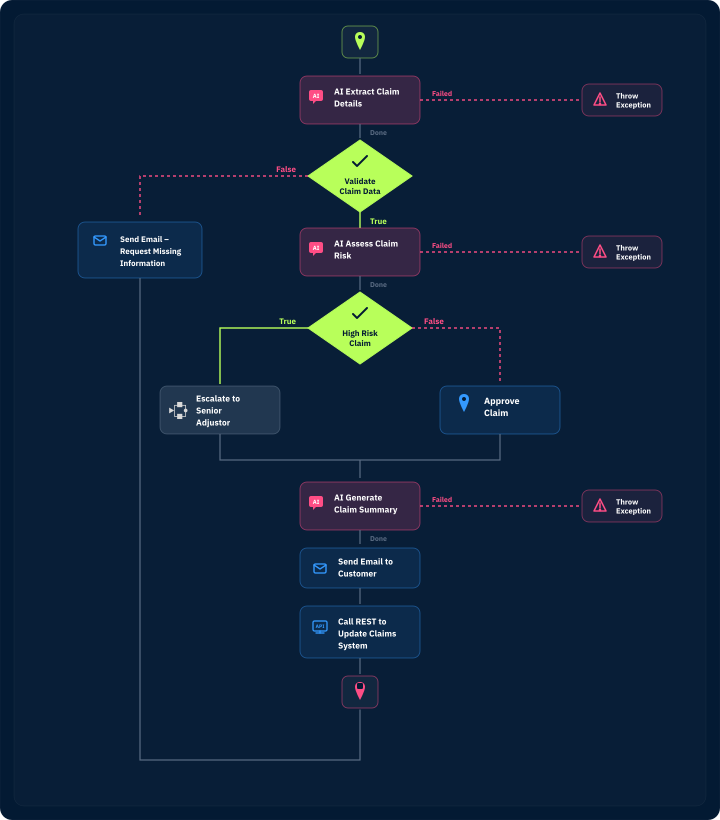
Let agents participate in workflows without giving up oversight, approvals, or auditability.

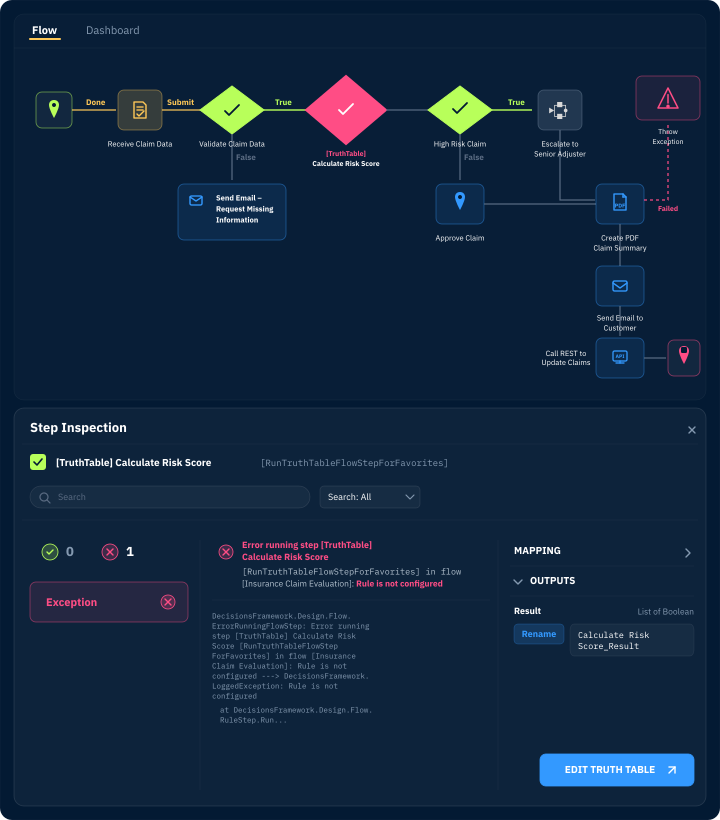
Track workflows in real time, analyze performance, identify bottlenecks, and continuously improve how work gets done.

Link systems, data, APIs, and AI services into workflows that are easier to change, monitor, and scale.
Decisions uses visual workflow design, reusable components, and business rules so teams can update steps, routing, and approval logic without rewriting the entire workflow. Changes still need appropriate testing, permissions, and deployment controls.
Yes. Decisions can coordinate agent actions within governed workflows, using business rules, approvals, audit trails, and controls to manage what agents can do. Human review can remain part of the process where needed.
Basic workflow tools route tasks. Decisions combines workflow automation, rules, integrations, orchestration, governance, and agent coordination in one platform.