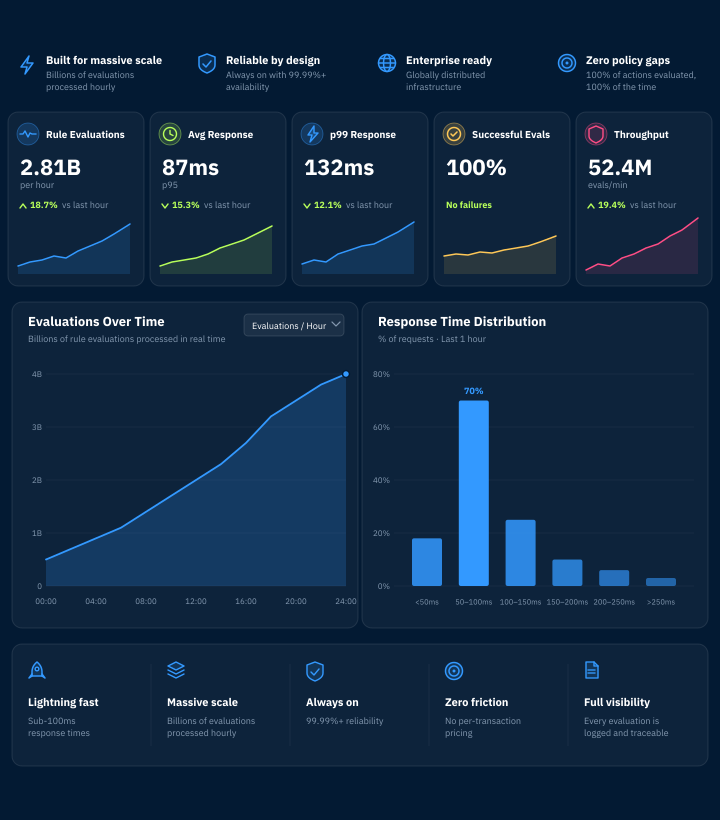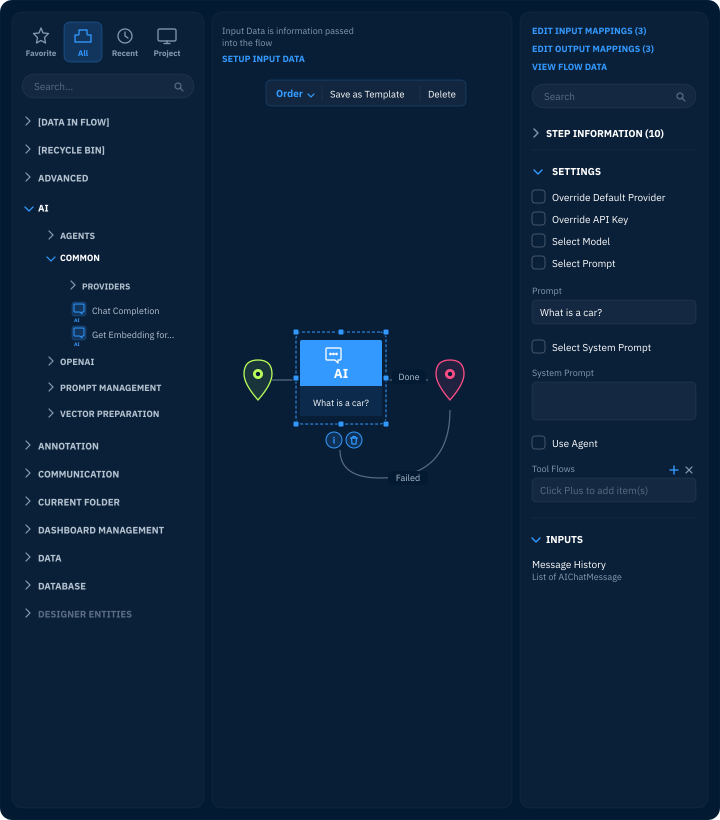
Put a powerful rules engine and intelligent decisioning at the center of your automation. Build, change, and govern the logic that determines what happens next across your processes, systems, and AI-enabled work.


Critical logic lives in hard-coded scripts only developers can touch. Every policy change becomes a dev ticket and a six-week wait.

Rules run in one system. Workflows run in another. Nothing talks. Inconsistencies multiply across channels.

Regulations shift. Markets move. But updating a single rule takes weeks of regression testing across fragile integrations.
In Decisions, the rules engine isn't a feature—it's the deterministic layer that powers orchestration, governs AI and agents, and drives every process forward with consistency and control.

Power intelligent decisioning with clear, testable logic, not hidden code or unpredictable behavior. Know exactly why every decision is made.

Power orchestration, govern AI and agents, and ensure every decision leads to the right action.
Other platforms treat rules as a feature. Decisions treats them as the foundation. Every workflow, form, integration, and AI interaction is powered by centralized, visual logic you can see, test, trace, and change.

No handoffs between a rules engine and a BPM tool. In Decisions, logic and orchestration live in the same platform—so rules drive actions instantly, not eventually.


“We’ve reduced the number of rules by 69% from 3,500 in our legacy system to 1,100 in Decisions, and we’ve cut rule update time by more than 90%.”
DVM, GlobalVetLink

Read the eBook to understand how business rules work, where they fit in your automation strategy, and how to manage them at scale.

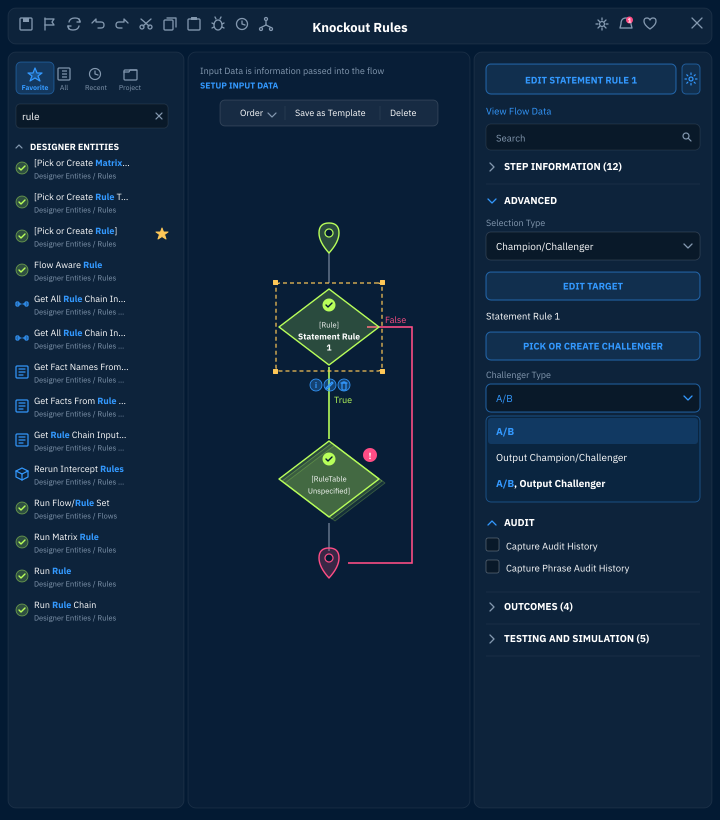
Decisions gives business and IT a shared visual canvas for any complexity level.

Competitors bolt rules onto workflow tools. In Decisions, rules are the orchestration layer—powering every workflow step.

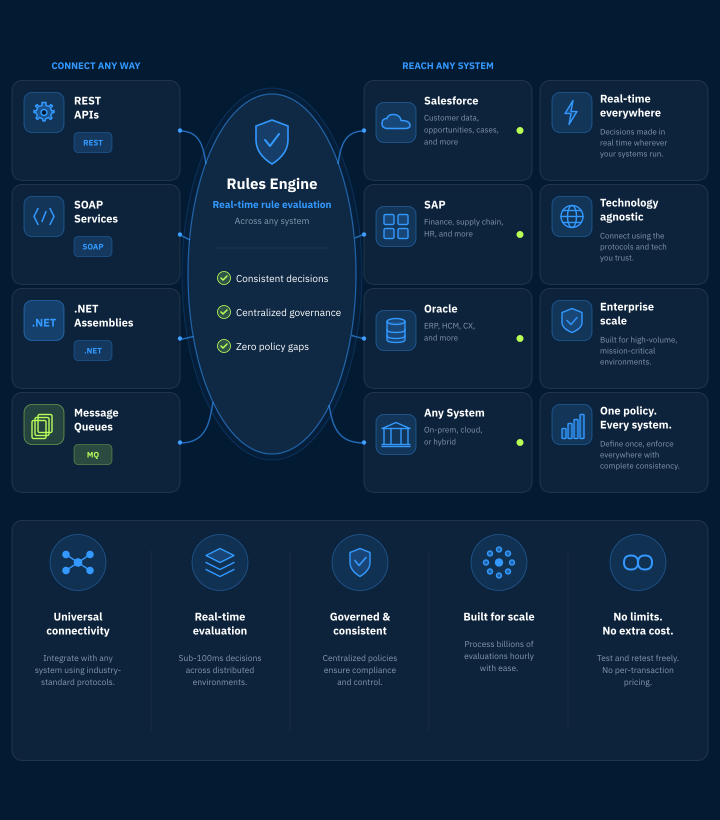
Powered by the rules engine at its core, Decisions coordinates processes, systems, people, and AI in one governed orchestration layer.



The rules engine is the deterministic core that enforces decision logic. A rules engine evaluates business logic and returns an outcome, such as approve, reject, route, calculate, escalate, or request more information.
A workflow engine moves work between steps; a rules engine decides what should happen at each step. Decisions runs both together, so rules drive workflow branches and workflows invoke rules consistently.

See how Decisions helps you build rules that drive faster processes, stronger controls, and more adaptable automation.

When an outcome is wrong, no one can trace which rule fired, with what data, or why—making audits a nightmare.

Subject-matter experts know the logic but can't build it. Developers have the tools but lack the domain context. Both are stuck.

Every team adjusts logic in its own corner of the business. Over time, "the rule" becomes five different versions—creating inconsistent outcomes no one can fully control.

Control when AI acts, when humans intervene, and how outputs are validated.

Manage decision logic outside application code without losing structure, governance, or auditability.

Version, test, review, and trace rule behavior so teams can change logic with confidence.

Every extraction, every decision, every action is logged automatically. Know what was read, when, and what it triggered—at any time.
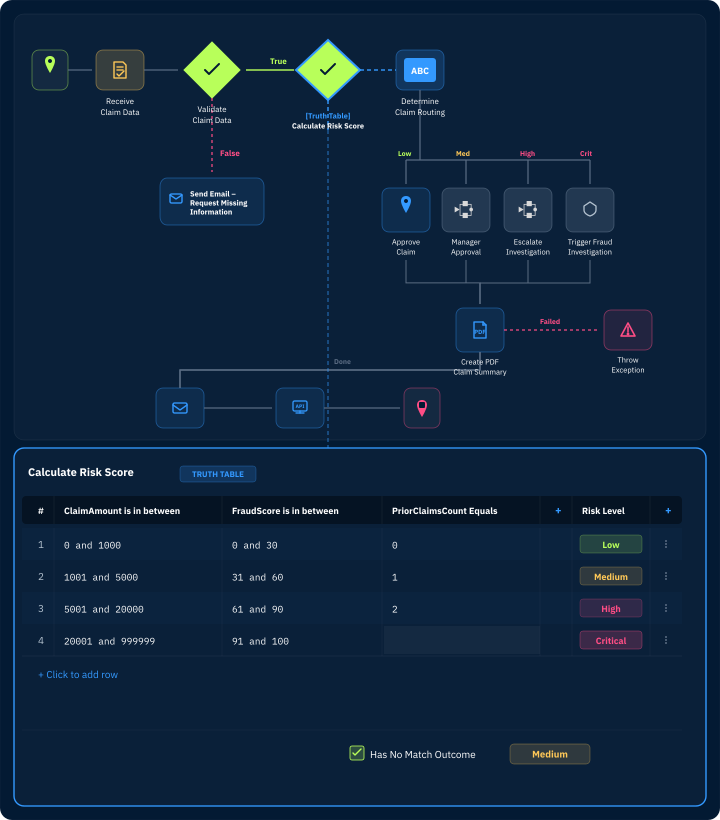
Decision tables, truth tables, flowcharts, rule sets, mathematical and statistical models, and natural-language policies—each fully visual, versioned, and testable without code.
Yes. Subject-matter experts edit rules in plain-language and visual editors, with IT retaining governance, approvals, and deployment controls.
Intelligent decisioning is the practice of making consistent, explainable decisions automatically by combining business rules, data, and AI. The Decisions rules engine is the deterministic core behind it, evaluating policies, data, and conditions to return reliable outcomes, and governing when AI or agents can act.