Control automation and AI from design to execution with built-in governance, rules-driven policy enforcement, audit trails, and AI guardrails across every workflow.


Governance often lives across separate tools, teams, and spreadsheets, making it hard to enforce policies consistently.

When rules are buried in code, changes take longer, require IT handoffs, and create risk when regulations shift.

Agents and models can introduce unpredictable actions unless they run within clear rules, approvals, and monitoring.
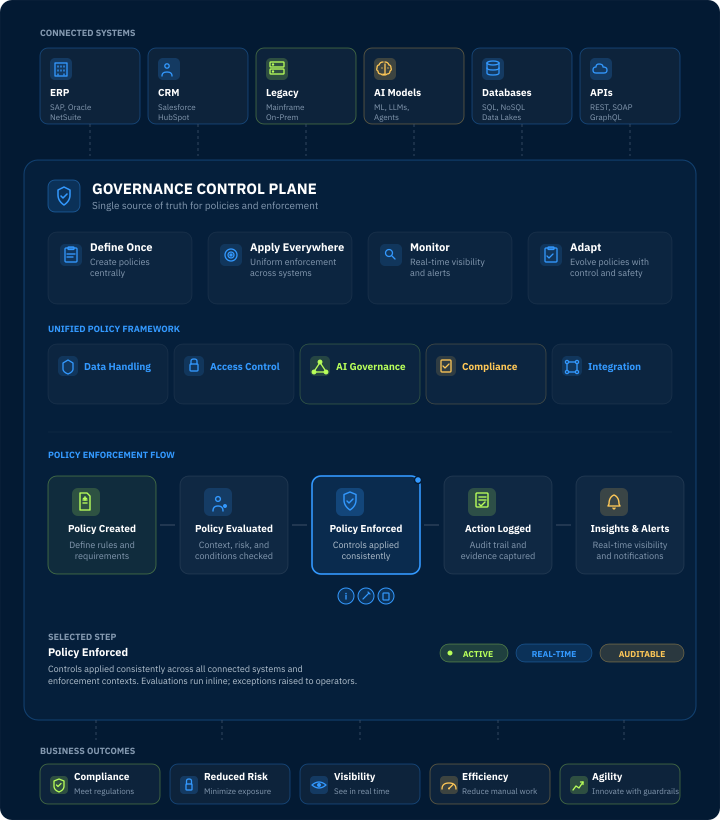
Governance is embedded into the Decisions platform with a rules engine at the core, unified orchestration, and AI guardrails, helping you stay compliant, auditable, and secure.

Enforce policies automatically through centralized rules while controlling who can build, modify, and deploy with granular permissions.

Every rule, workflow, and AI action is automatically logged, giving you full traceability and effortless compliance.
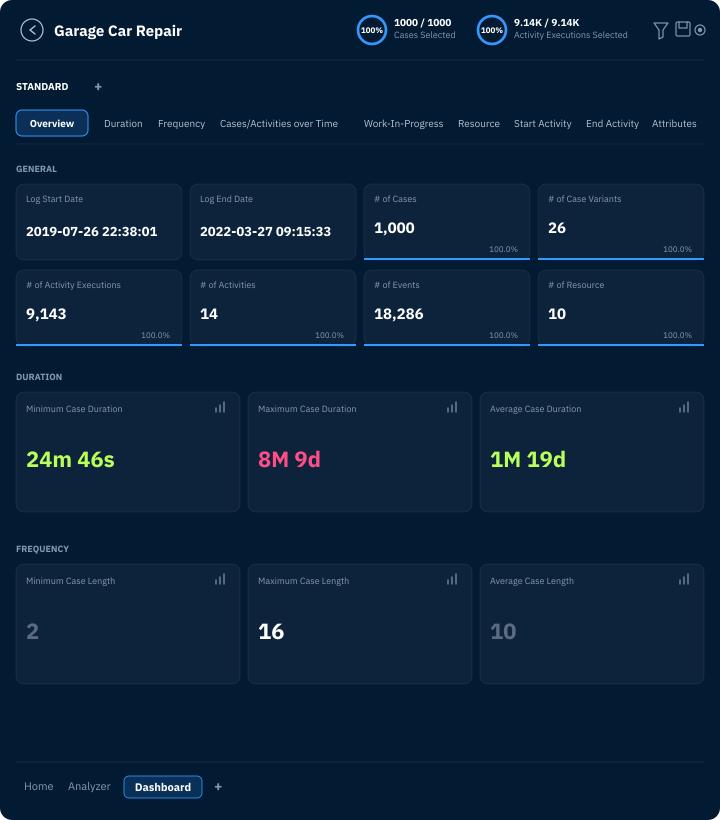
Design policies visually, test changes safely, enforce controls across systems, monitor execution in real time, and maintain audit-ready records from one governed automation environment.

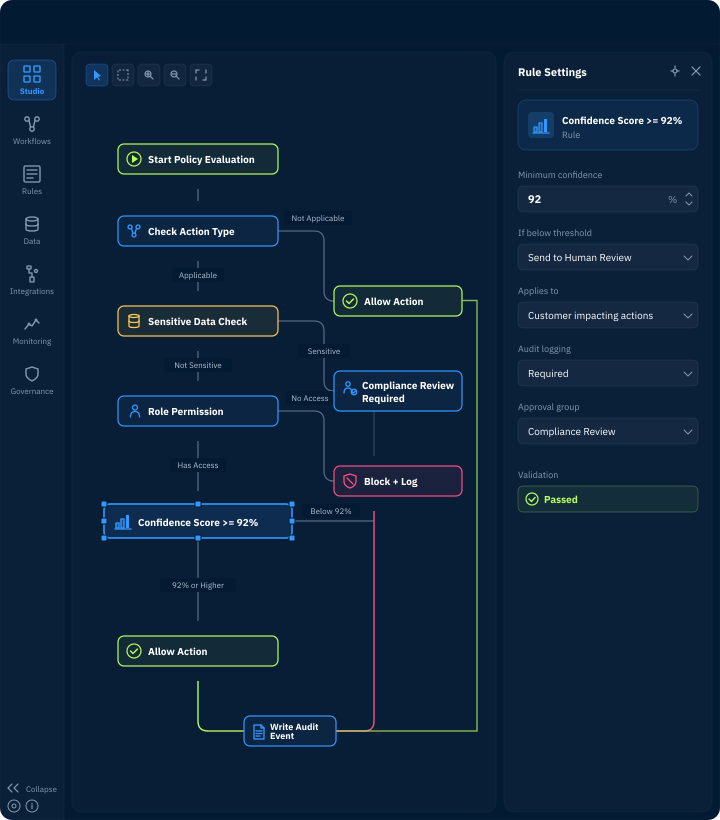
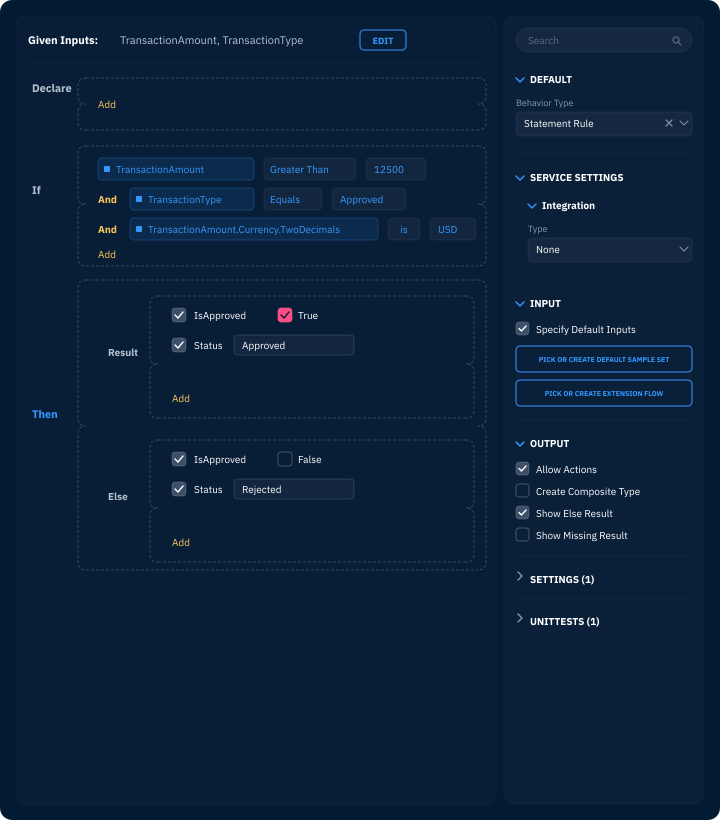
Build and manage governance rules in a no-code visual environment, so business and compliance teams can own policy logic directly.


“The Decisions Platform is a deeply powerful, flexible, enterprise-class no-code automation environment that can handle my highly complex workflows, rules and integrations with high accuracy and improve my productivity. My experience shows that it can handle complex workflows, rules and integration challenges with ease. It suits my organization's needs for audit-ready and rule-driven systems.”

Ranked in top 5 across all four evaluated use cases. Gartner® Critical Capabilities for Decision Intelligence Platforms report 2026.*

Make policy executable and consistent across processes, systems, and AI-enabled work.

Govern workflows, rules, integrations, people, bots, and agents from a unified orchestration layer.

Let business teams update logic visually while IT maintains permissions, approvals, security, and oversight.



AI can make decisions. Where does the control live? See what happens when AI becomes part of a governed business process.
Governance is the framework for controlling how decisions are made, how work is executed, and how actions are tracked. In Decisions, governance spans rules, workflows, permissions, data access, integrations, AI usage, agent actions, approvals, versioning, and audit trails.
Decisions governs AI with rules, orchestration, permissions, and traceability. Rules define when AI can be used, what data it can access, what actions it can trigger, and when human review is required. Logs capture activity so teams can monitor, explain, and audit AI-driven outcomes.

See how Decisions helps you enforce policy, prove compliance, and keep automation accountable from design through execution.
*Gartner does not endorse any specific vendor, product, or service mentioned in its research publications. It does not recommend that technology users exclusively choose vendors with the highest ratings or other distinctions. Gartner’s research publications reflect the opinions of its research team and should not be interpreted as factual statements. Gartner disclaims all warranties, express or implied, related to this research, including warranties of merchantability or fitness for a particular purpose. Gartner is a registered trademark and service mark of Gartner, Inc. and its affiliates, both in the United States and internationally. Magic Quadrant is a registered trademark of Gartner, Inc. and/or its affiliates, used herein with permission. All rights reserved.

Without complete logs and version history, teams struggle to prove what changed, who approved it, and why decisions were made.

Manual reviews slow work down and still leave gaps when processes span multiple systems, people, and automation tools.

As processes, systems, and AI usage change, governance rules can fall out of sync with how work actually happens—creating gaps between policy, execution, and accountability.

Keep AI agents aligned to defined decision paths with deterministic controls that prevent drift, limit scope, and ensure every action stays within bounds.

Support auditability, traceability, and policy enforcement for complex operations in industries where control matters.

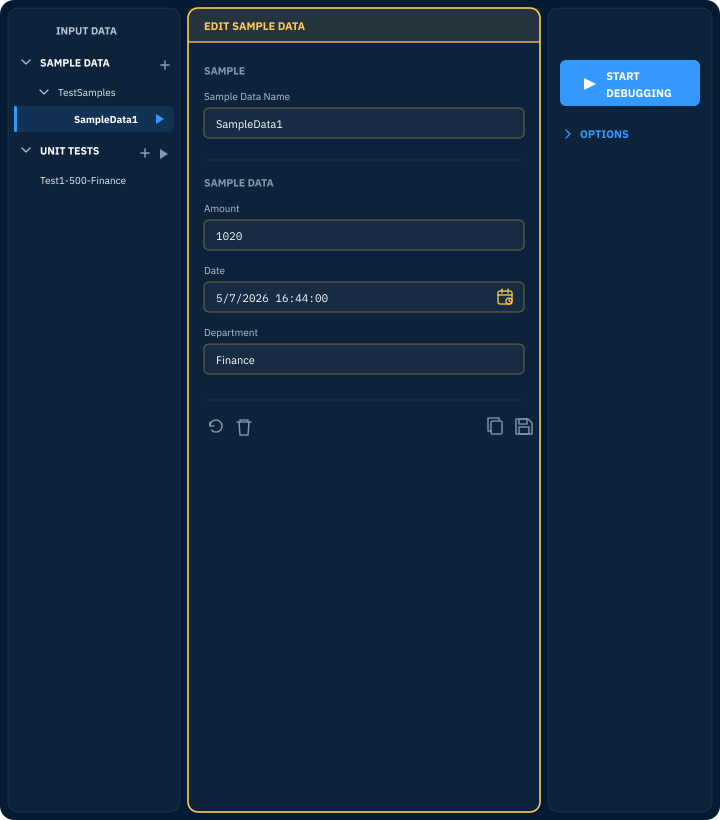
Validate rules, workflows, and AI-enabled actions before they go live, reducing risk while giving teams confidence that governance policies will work as intended.

Scale AI orchestration and agentic automation without losing visibility, explainability, or deterministic guardrails.
Decisions brings governance directly into the automation layer. Instead of managing policies separately from execution, Decisions combines rules, workflows, AI orchestration, permissions, versioning, monitoring, and audit history in one platform.
Yes. Decisions integrates with ERPs, CRMs, data platforms, legacy systems, AI models, and modern applications while applying consistent rules, workflows, and governance controls across them.
Decisions helps teams enforce policies, document decisions, track changes, and maintain audit-ready records. Centralized rules, approvals, logs, and time-stamped history make it easier to adapt when regulatory or internal requirements change.