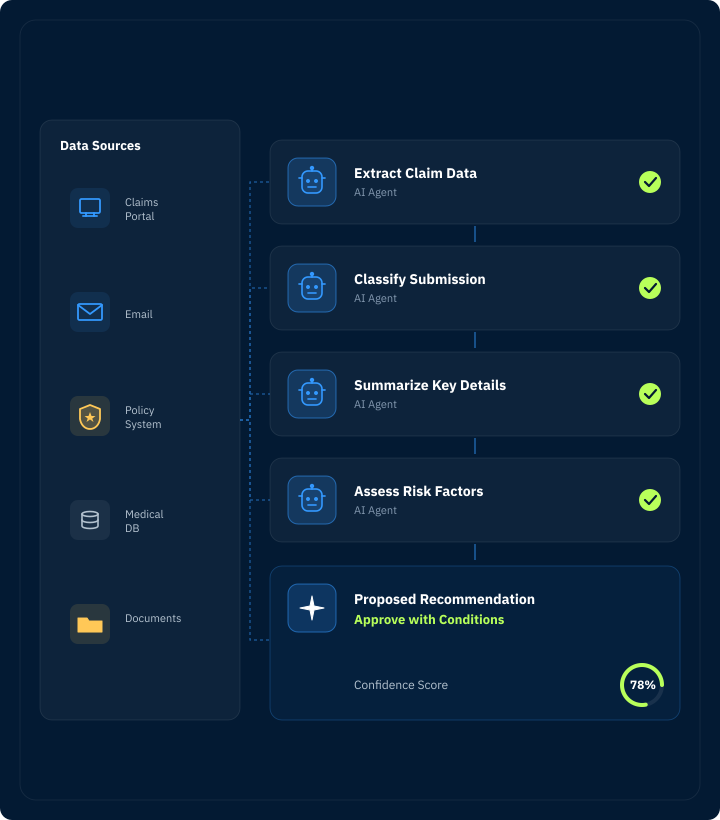
AI agents are powerful, but without governance, they create sprawl and risk. Decisions lets you design, coordinate, and control AI agents end-to-end, ensuring safe, efficient, and scalable use across the enterprise.

Most organizations aren’t short on AI tools. They’re short on coordination. Agents built in isolation make decisions in the dark—without access to the right data and guardrails for regulated actions, and without the ability to hand off to a human when it matters.

Without a coordinating layer, agents duplicate work, contradict each other, and create more disorder than efficiency.

When agents operate outside governed workflows, there’s no record of what ran, what was approved, or why a decision was made.
Decisions orchestration coordinates agents, models, people, and systems under a single control plane. Embed AI agents inside governed business processes, and keep humans in the loop where judgment, compliance, or accountability demands it. You get AI that’s traceable, auditable, and actually reliable at scale.
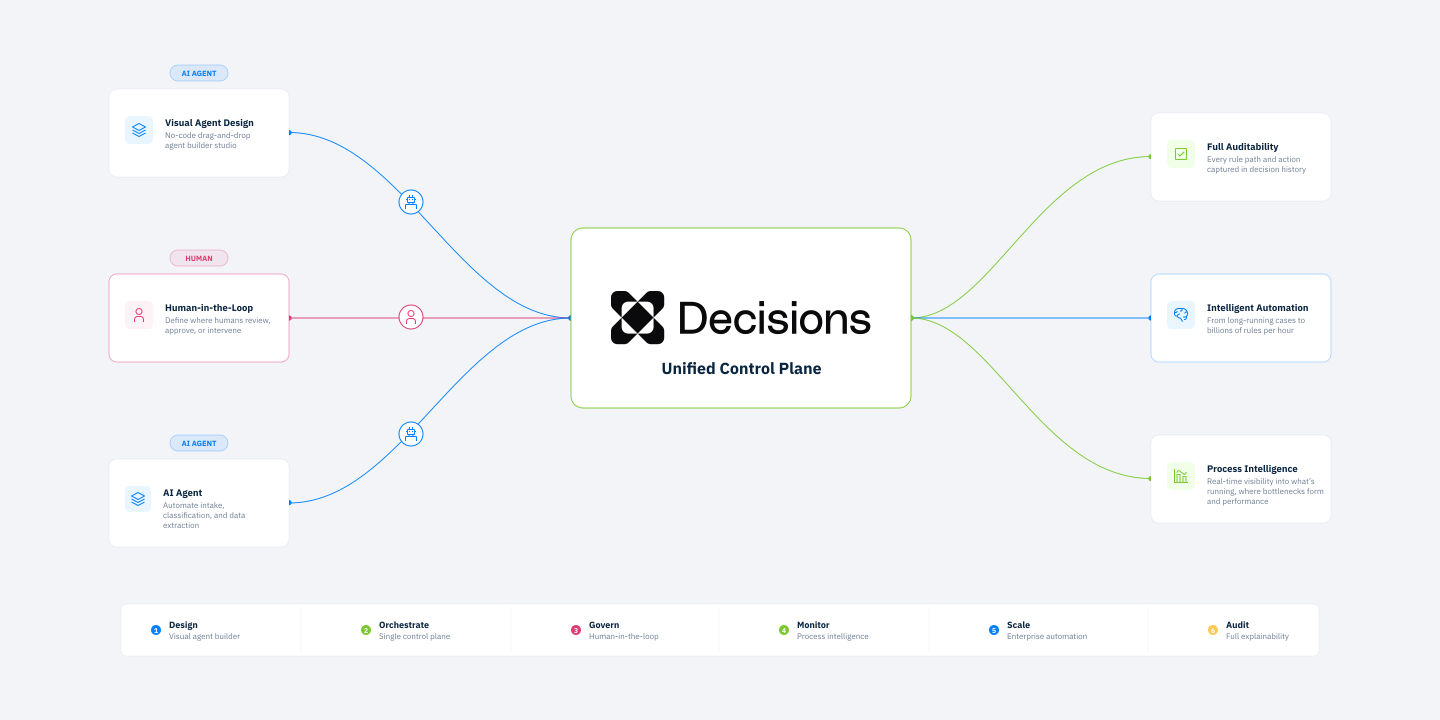
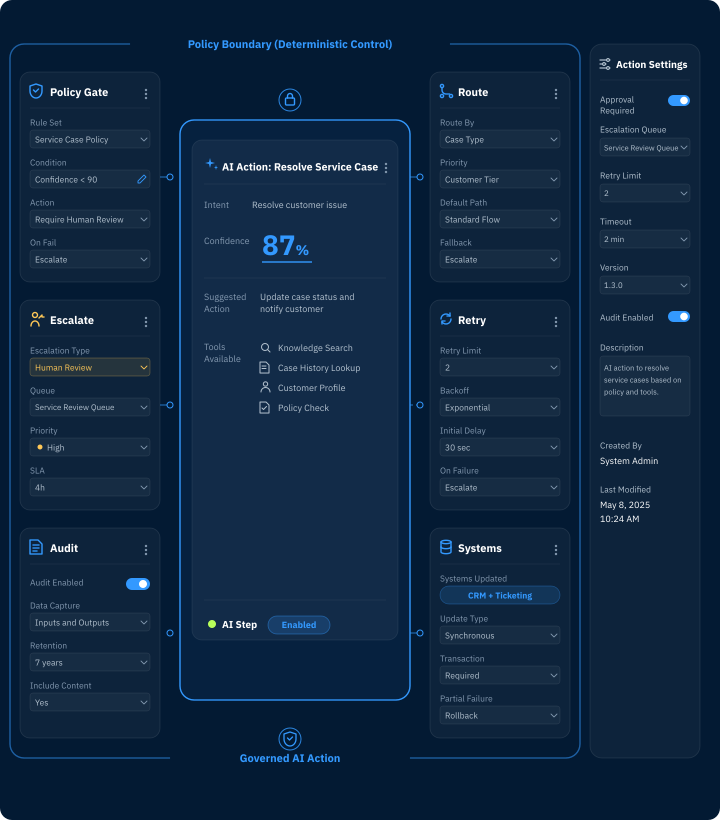
Rules govern the steps that require precision. Agents handle the steps that require reasoning. Both run inside the same orchestration layer — giving you structure where you need it and flexibility where it adds value.

Run high-volume, repeatable decisions automatically without adding headcount.

Apply the same governed rules to every workflow and every agent action.
From building your first agent to governing hundreds across the enterprise, every capability is unified in a single drag-and-drop studio.

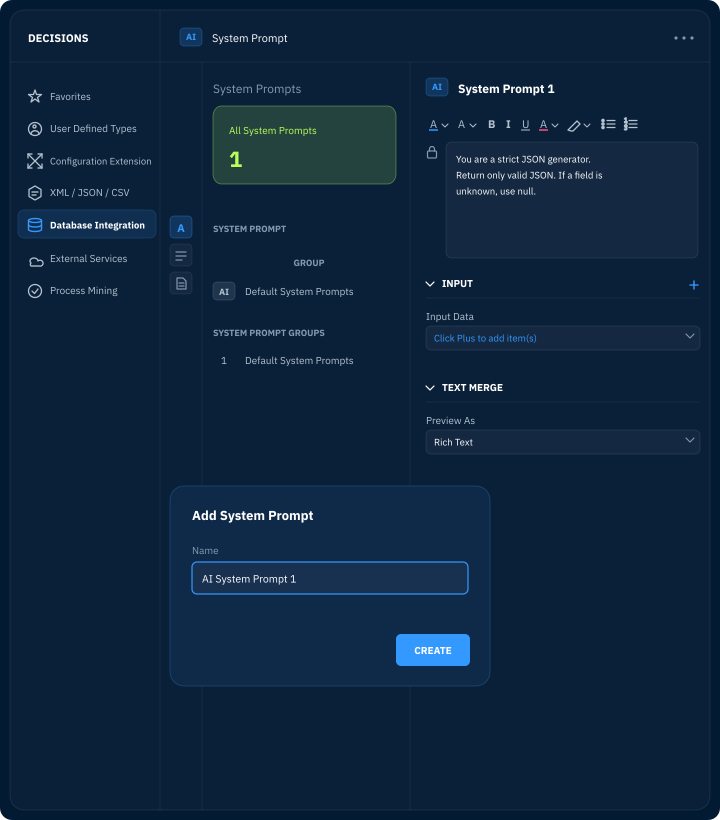
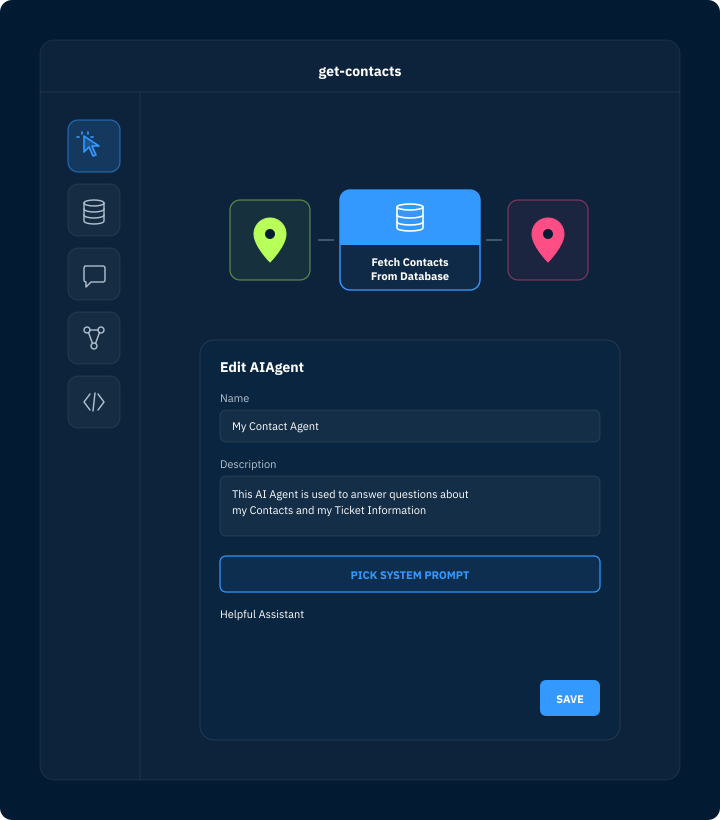
Create, customize, and manage first-party and third-party AI agents using a drag-and-drop design studio. Compose agents from governed building blocks without writing code.








“Decisions not only streamlines our operations but also provides us with the data-driven insights necessary to enhance productivity and eliminate redundant processes.”
CFO, American Financial Network

Agentic orchestration is the practice of embedding AI agents inside governed business processes—so they take coordinated action across systems, data, and people. It combines the reasoning capability of AI agents with the structure and governance of process orchestration. The result is automation that can handle complexity and variability, while staying predictable, auditable, and aligned with how your business actually works.
Standalone agents and RPA bots are powerful for specific tasks—but they weren’t built for end-to-end process coordination. An agent that can’t trigger downstream workflows, escalate to a human, or log its decisions for compliance isn’t enterprise-ready. Agentic orchestration brings all of that together: agents operate inside governed processes, integrate with your systems, and can hand off to people or other agents when needed. It’s the difference between a capable assistant and a reliable operational system.

Control and orchestrate your agents across systems to maximize value and minimize risk.

An agent completes a task and stops — leaving a human to manually carry the output forward.

Let agents coordinate and hand off to reach better outcomes together.

Grow agent and process volume without multiplying integration overhead.

Capture every decision, action, and handoff in a complete, reviewable record.

Reroute, branch, and escalate as conditions and inputs change in real time.
Traditional business process automation software follows predefined paths — if this, then that. Agentic AI orchestration goes further: AI agents can interpret unstructured inputs, respond to changing conditions, and coordinate multi-step workflows without a human scripting every branch. You still get the structure and governance of process automation, but agents handle the variability that rules-based tools can’t. Think of it as business process automation software with the ability to think through exceptions, not just execute around them.
The right process orchestration tools for AI agents need to do three things: embed agents inside governed workflows, integrate with your existing systems, and give you visibility into what agents are doing and why. Platforms that combine no-code process design with agent coordination and built-in compliance controls are increasingly the standard for enterprise deployments. What separates mature tools from early-stage ones is auditability.
The key is building oversight into the process design before it goes live. Effective AI automation lets you define exactly which decisions agents handle autonomously and which ones require a human to review, approve, or escalate. Agents can be configured to pause when confidence is low, flag exceptions outside defined parameters, or route specific case types to a specialist automatically. As a result, humans stay involved where their judgment matters, without being pulled into every step.


© 2026 Decisions