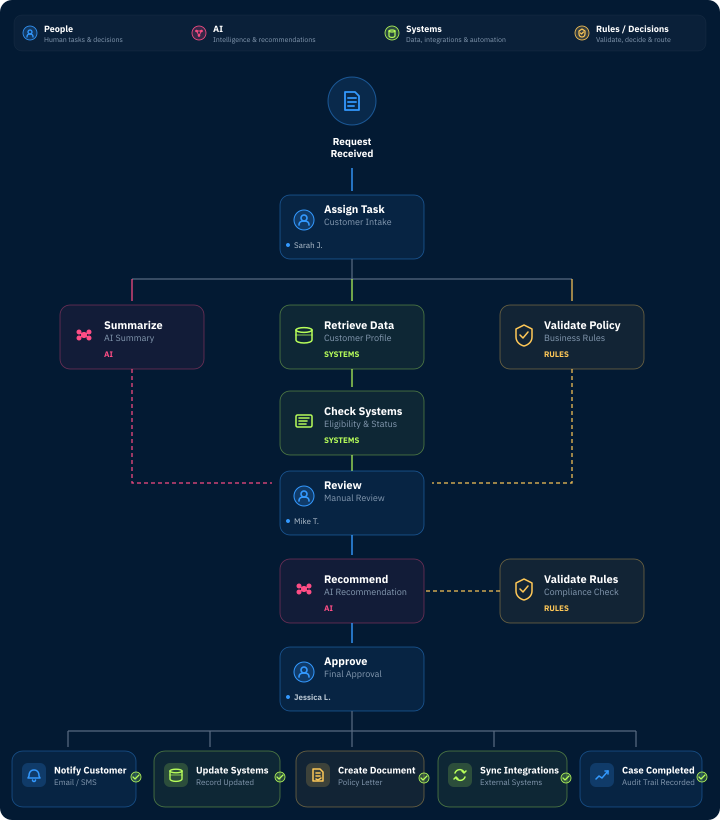
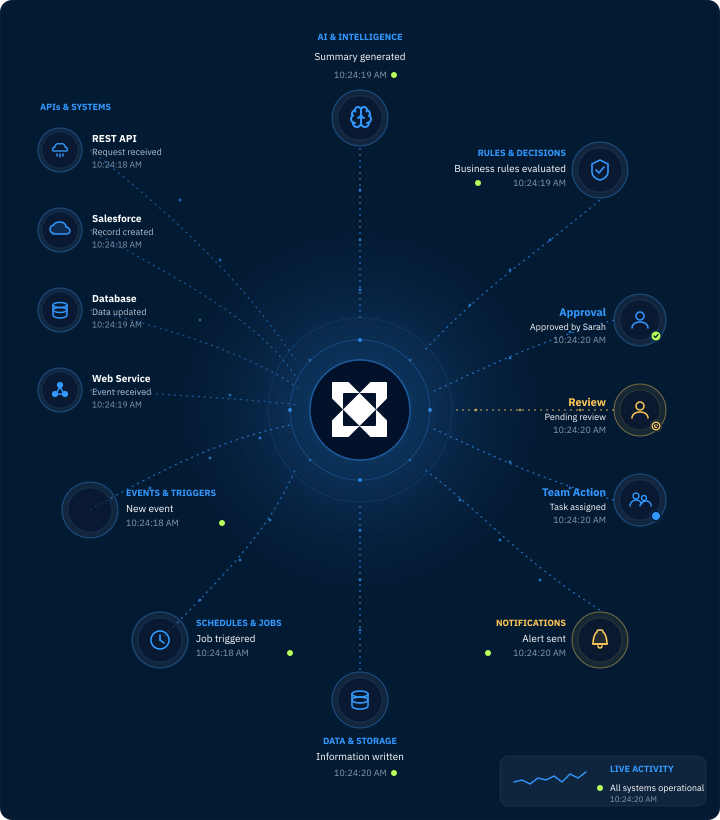
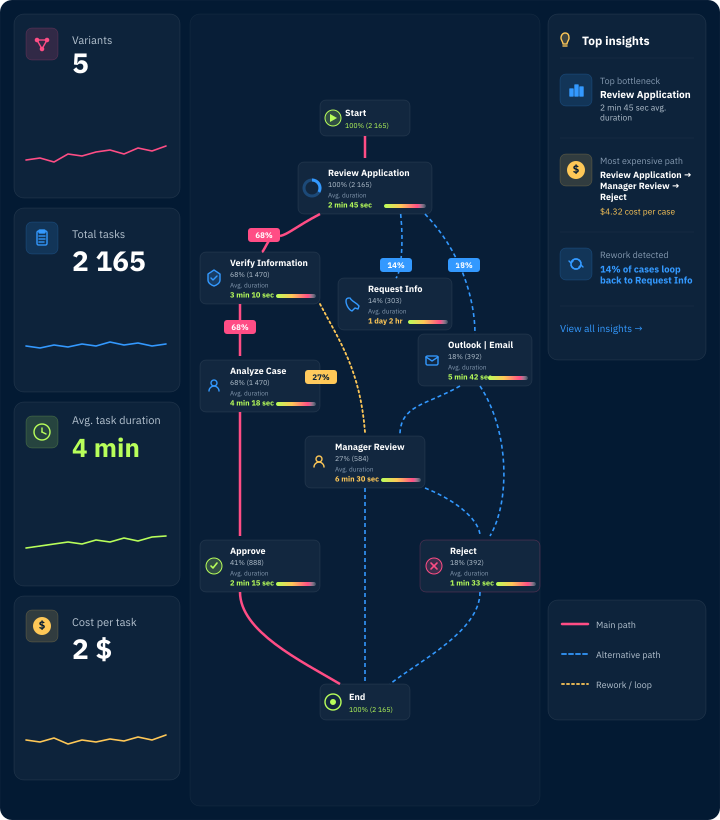
Decisions gives you the workflows, rules, integrations, AI, governance, and orchestration capabilities to create an automation platform tailored to your business.

Your business is unique, and so are your processes. A tailored process automation platform can reflect the rules, systems, roles, and operating model that make your organization different.

Your teams understand the approvals, exceptions, rules, service levels, risk thresholds, and handoffs that make each process work. A tailored platform lets you capture that knowledge instead of forcing it into a generic workflow model.

The way departments, regions, roles, vendors, customers, and systems interact is unique to your organization. Your automation environment needs to reflect those relationships.

Even companies in the same industry rarely have the same mix of core systems, legacy applications, data sources, portals, APIs, and third-party tools. The automation platform has to fit your stack.
Decisions gives you the modular core capabilities to build a process automation platform around your business—combining workflows, rules, forms, integrations, AI, governance, and visibility in one flexible foundation.
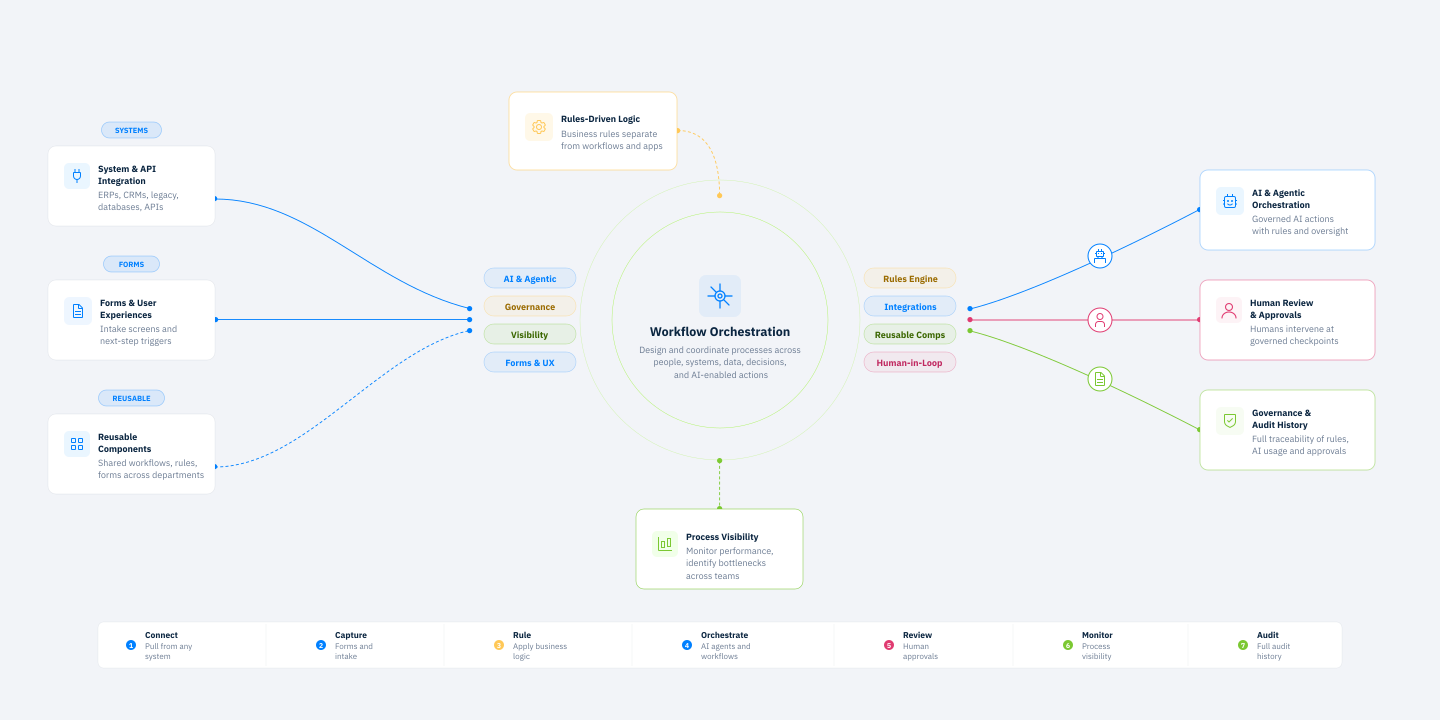
Decisions gives organizations something most automation platforms do not: a rules-first foundation for building governed, cross-system process automation.

Start with proven workflow, rules, forms, integration, AI, and governance capabilities instead of building the foundation yourself.

Configure workflows, rules, forms, roles, integrations, and governance around your business instead of adapting your processes to fixed software.

Turn your policies, approvals, thresholds, routing logic, exceptions, and compliance requirements into reusable business logic.

Coordinate people, data, documents, APIs, legacy systems, core applications, AI, and decisions across end-to-end processes.

Manage permissions, approvals, versions, audit trails, AI usage, rule changes, and process activity from one controlled foundation.

Start with one high-value process, then reuse rules, workflows, forms, integrations, and governance patterns across new departments and use cases.
A unified platform designed to run your business—No silos, No handoffs, No guesswork.

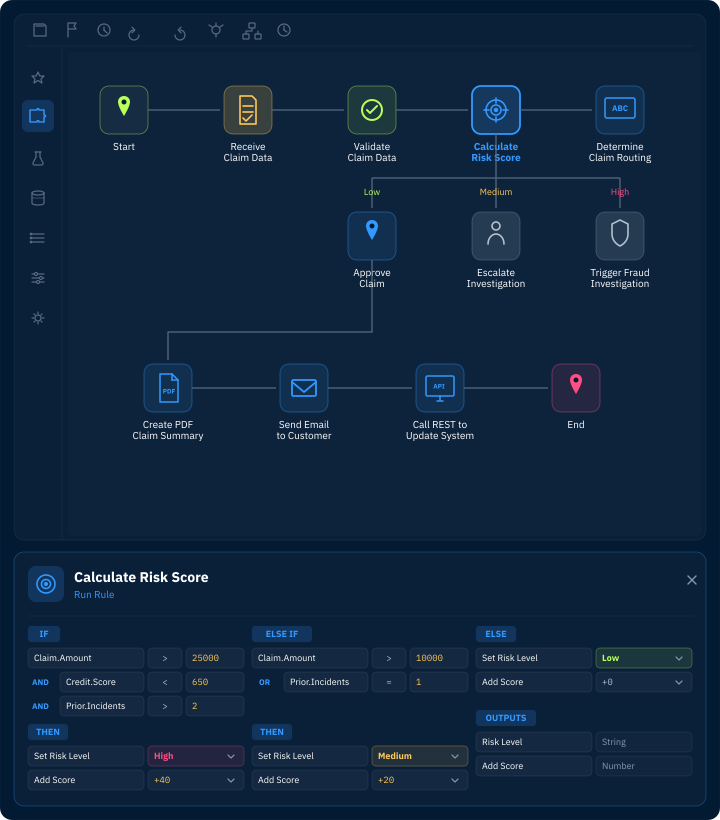
Model and execute complex logic with an enterprise rules engine








“Decisions isn't just a part of our business. Decisions is our entire product and our entire solution.”
CEO, KnowLedger

A tailored process automation platform makes sense when your processes depend on unique business rules, exceptions, systems, roles, or governance requirements that packaged software cannot easily accommodate. It can also be useful when you want one reusable foundation for multiple processes instead of adding separate point solutions.
No. Custom development requires teams to build the workflow, rules, integrations, security, governance, and monitoring foundation themselves. Decisions provides those enterprise capabilities so teams can configure and extend a platform around their own processes and systems.
A process automation platform should support workflows, business rules, forms, integrations, exceptions, governance, auditability, and operational visibility. Depending on the use case, it may also need AI, human review, reusable components, and tools for coordinating work across multiple systems.
Yes. Teams can create different workflows, forms, rules, and process applications while sharing common integrations, governance, visibility, and reusable components. This allows the platform to expand across departments without rebuilding the foundation for every new use case.
Governance should be built into the platform through permissions, approvals, version control, testing, audit trails, deployment controls, and centralized management of business rules and AI usage. This helps teams expand automation while maintaining consistency, security, and accountability.

Use Decisions as the foundation to create a flexible, governed process automation platform built around your systems, rules, teams, and goals.