BPMN 2.0 process modeling that runs on one platform.
Decisions lets you model processes in BPMN 2.0, the open standard that business and IT teams both read, then run them with rules, integrations, and governed AI. One model, from whiteboard to production.
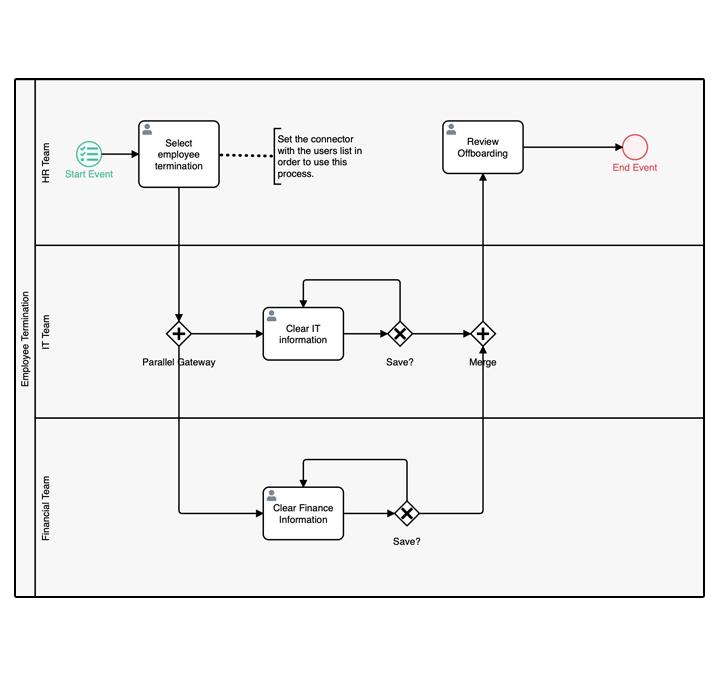
What is BPMN 2.0?
BPMN 2.0 (Business Process Model and Notation) is the open standard for drawing and defining business processes. It uses a small set of shapes with precise meanings, so the same diagram is clear to a business analyst and exact enough for software to run. The Object Management Group maintains it, and it is published as ISO/IEC 19510.
Why teams use BPMN 2.0.

One shared language
Business and IT work from the same diagram, so nothing gets lost in translation.

Precise enough to run
Every shape has defined behavior, so a model can become a working process.

Open and portable
It's a vendor-neutral standard, so your models aren't locked into one tool.
Core BPMN 2.0 elements.
You don’t need to learn the whole standard. A handful of shapes covers most processes, so business users can start modeling on day one.
Events
Circles that start, interrupt, or end a process, like a received request or a timer.
Activities
Rounded rectangles for the work itself, from a single task to a whole subprocess.
Gateways
Diamonds where the process splits or merges, based on a decision or in parallel.
Flows
Arrows that set the order of steps and show messages passing between participants.

Join the Possibility Lab
Bring us your toughest rules or process problem. We’ll give you 5 tailored recommendations you can take back to your team.
BPMN 2.0 in Decisions.
Decisions turns BPMN 2.0 models into processes that run, with rules and AI built in.

Start from anything
Sticky notes, a draft on slides, a whiteboard photo, or a written description: Decisions turns your process into a ready-to-run BPMN workflow.

Model visually
Design processes in a BPMN 2.0 modeler, with no code required.
Questions?
We’ve got answers.
What is the difference between BPMN and BPMN 2.0?
BPMN 2.0 is the current version of the standard. It added a formal XML format, so models can be shared between tools and run by process engines.
What is the difference between BPM and BPMN?
Business process management (BPM) is the discipline of running and improving processes. BPMN is the notation used to model them.
Can I import BPMN diagrams from other tools into Decisions?
Yes. Upload a BPMN 2.0 XML file and Decisions converts it into a flow you can build on.

Model it. Run it. Improve it.
See how Decisions takes your BPMN 2.0 models from diagram to production.


