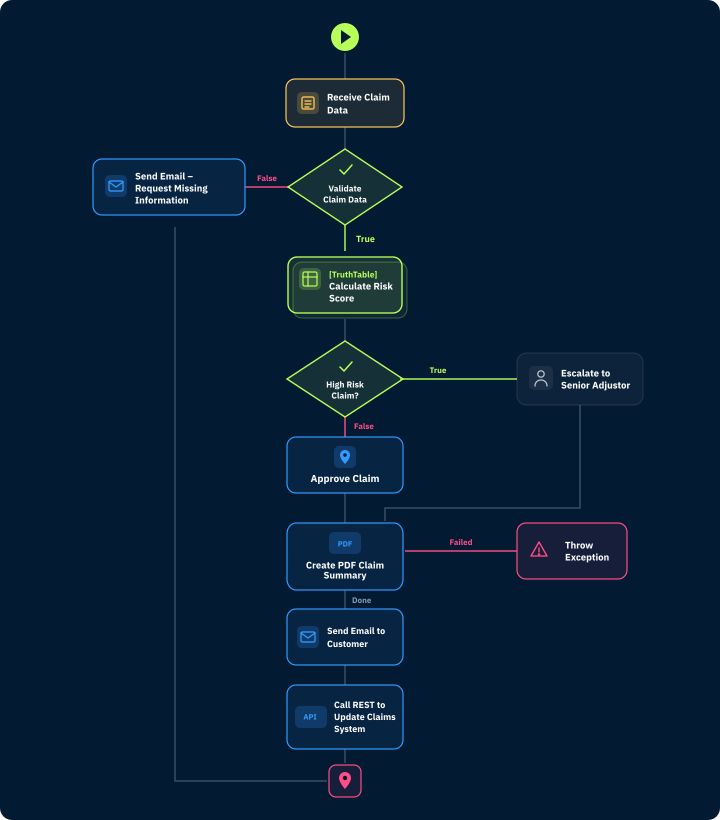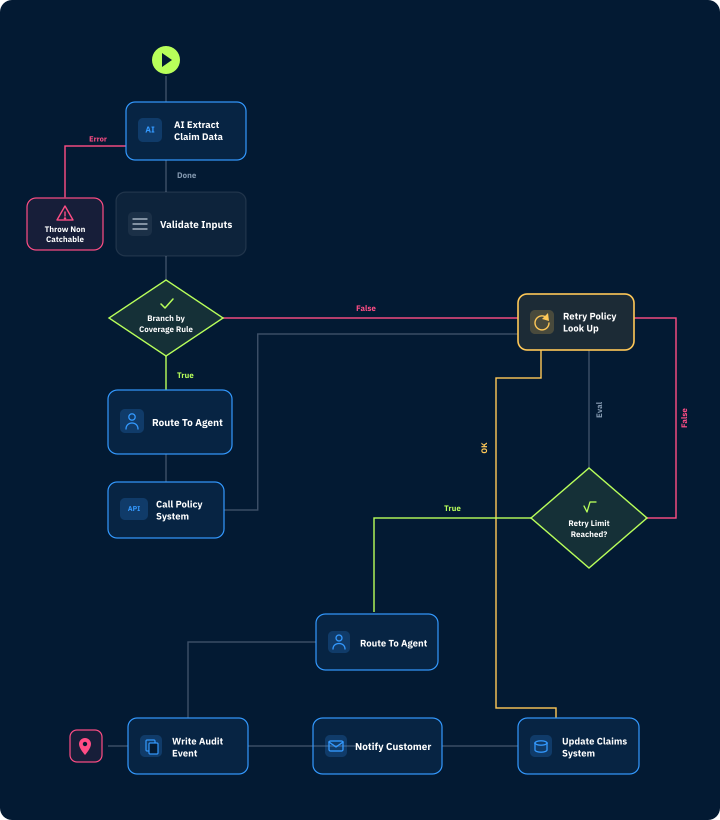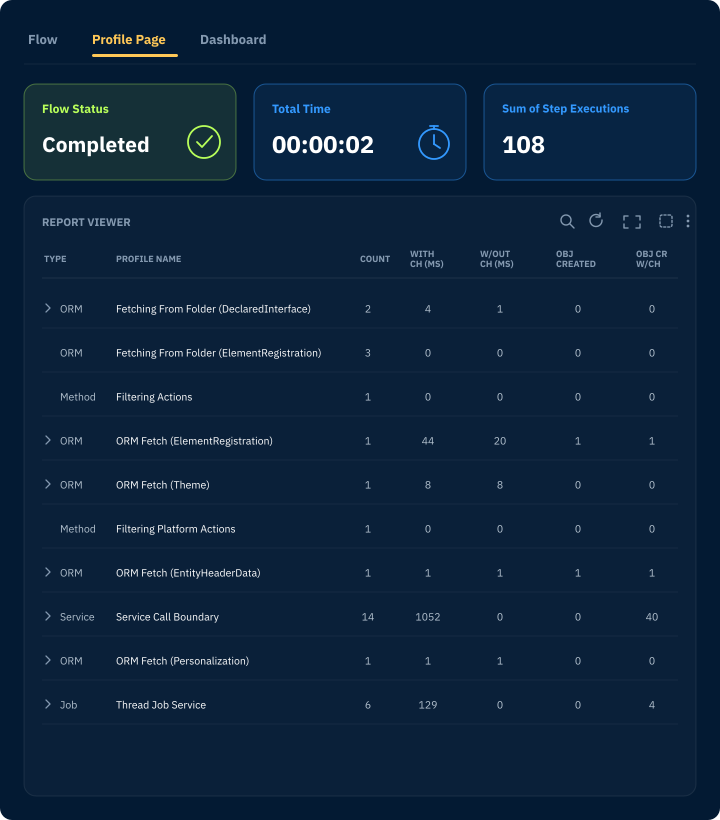
When cases branch, exceptions multiply, and decisions span weeks, you need automation that adapts and governance that holds. Decisions orchestrates rules, workflows, AI, and human judgment to automate and govern the cases others can’t.

Claims change mid-review. Loan applications require additional documentation weeks later. Patient cases span months with evolving conditions. These processes don’t follow a straight line—your automation shouldn’t either. The result:

Rigid workflows can’t handle the back-and-forth that complex cases demand.

When processes span multiple systems, teams, and timeframes, maintaining a complete audit trail and enforcing consistent policy becomes exponentially harder.
Decisions gives you a single platform where AI handles the volume, the rules engine enforces the logic, workflows manage the handoffs, and humans step in only when their judgment truly matters.
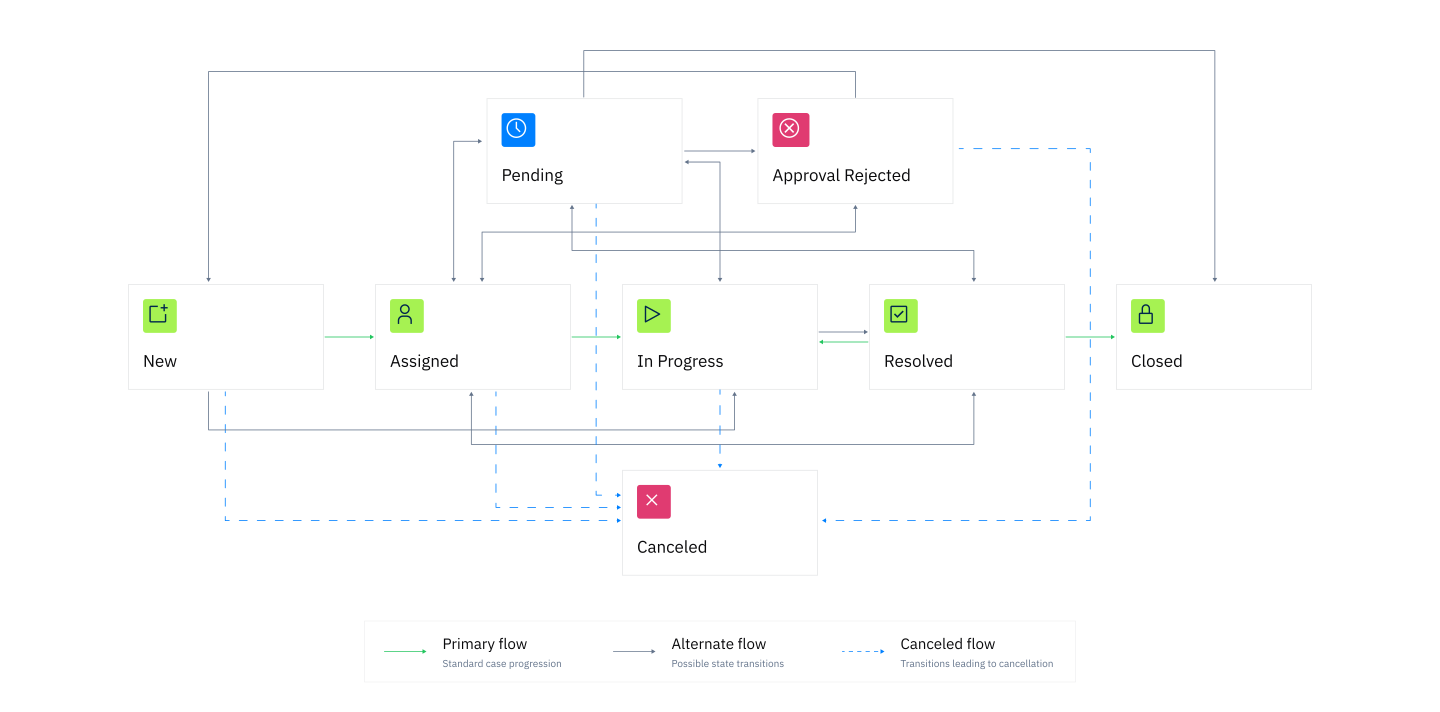
Most organizations automate the easy work and manage the rest manually. Decisions flips that equation, orchestrating the complex cases end to end while the rules engine governs every action, decision, and handoff. The impact shows up across the entire operation.


A unified platform designed to help employees manage ad hoc requests, unstructured processes, and disconnected data sources.

Build case workflows, rules, forms, and decision logic.
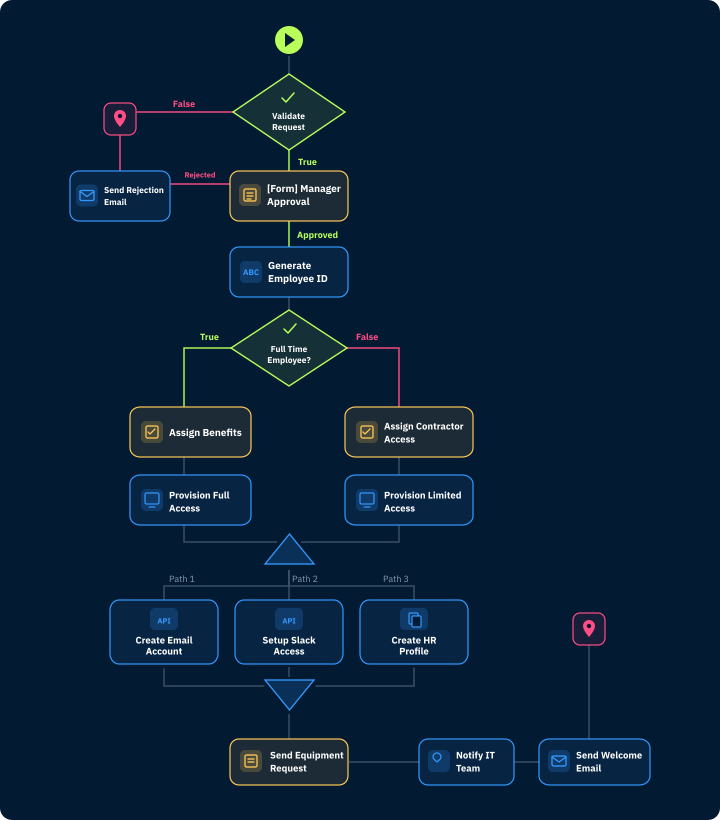


Complex processes don’t follow a straight line—they branch, span teams, and require both speed and control. Too complex for basic automation, too high-volume for manual work. Decisions bridges the gap.






“Decisions has been a gamechanger for us in terms of process efficiency, allowing non-technical team members to handle data assignments without constant engineering support, which has made a measurable difference in our productivity and capacity to scale.”
VP of Product, Cota

Case management software helps organizations manage work that changes as new information, decisions, exceptions, and human judgment enter the process. A case may branch, pause, reopen, or continue for days, weeks, or months while maintaining its history, documents, decisions, and next steps.
Workflow automation works best when the path is predictable. Case management is designed for dynamic, long-running work where the next action depends on context, new information, exceptions, business rules, or human judgment. Decisions supports both, so structured workflows can operate inside a broader case lifecycle.

See how Decisions orchestrates complex, long-running processes with AI, rules, and human judgment in a single platform.

Knowledge workers spend hours on data gathering, classification, and routing that AI could handle—while genuinely complex decisions that need human judgment wait in the queue.


Organizations can automate claims, applications, patient coordination, regulatory reviews, appeals, transfer credit evaluations, nonconformance and corrective action, and other cases that involve repeated intake, routing, decisions, documents, and approvals. Human review can remain in the process wherever judgment is required.
Look for the ability to manage changing case paths, long-running work, business rules, documents, integrations, exceptions, human approvals, audit trails, and real-time visibility. For complex environments, the platform should also coordinate work across multiple systems without losing case context or governance.
AI can help classify cases, extract information, summarize documents, triage requests, and recommend next steps. Decisions places those AI-assisted actions inside governed case workflows, where rules determine what can proceed automatically and when a person must review or approve the next action.