The Problem
The National Sanitation Service Superintendence (SUNASS, for its Spanish initials) provides information and computer technology support to companies that provide water and sanitation services to Peru. The organization needed to quickly improve information technology management, because users felt that their requests were not responded to in a timely fashion. Technical support processes were inconsistent, varying at each individual level of management in the organization. Existing technical support processes and help desk resources were not filtering and organizing user requirements according to system capacity. Information regarding service requests, including any steps taken and the state of a request, were not tracked efficiently.
- Many telephone calls required to determine status of requests
- A lack of control in job and task assignment which, in some cases, generated an overload.
- Approval backlog, resulting in a bottleneck of pending tasks at supervisors desk
- Difficulty in following paper-based and phone-based requests
- Difficulty managing technical support's performance given that information on statistics was lacking.
- Delays in request response time.
The Solution
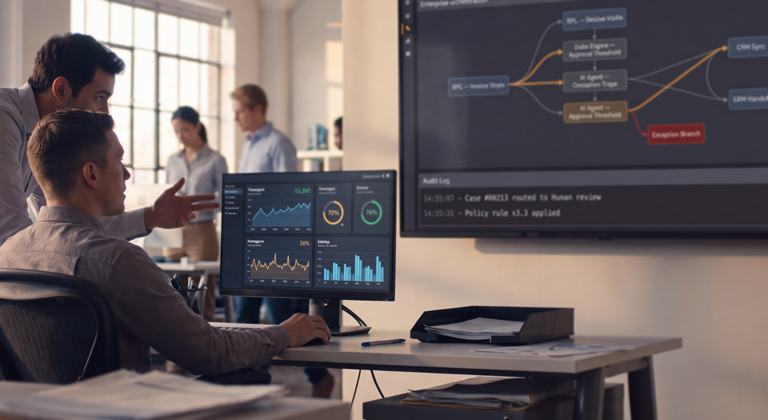
The implementation of ProcessMaker established a structure that allowed SUNASS to establish consistent, measurable processes. These processes covered the basic delivery of technical support, staff allocation to meet request workloads, and managing equipment (assigning to support staff, equipment location, equipment return). Internal processes were also established to improve performance. Support staff could request training on using operating systems, office software, internal development software, as well as email and Internet applications. Staff could also make internal support requests to improve internal systems. Some processes crossed department boundaries. For example, the head of human resources would now be able to control access to systems to equipment according to their employment status. ProcessMaker automated both external and internal requests to support the newly established processes. Either the user or support technicians could submit new requests to the system, which triggered a case number for tracking purposes. Support staff received support requirements automatically, and they could easily check the status of pending cases in a web-based inbox, assuring more prompt service. and logic defined in ProcessMaker, allocated requests automatically to staff according to the request type and the skill set of available staff. Three levels of support were established, and the workflow that ProcessMaker initiated depended on the the urgency level of the request. At the highest level, which required contact with experts and external provides, ProcessMaker would provide a list of suggested experts to consult in regards to the request. Internal equipment requests were managed thorugh ProcessMaker and integration with the SUNASS equity database.