Decisions is a process orchestration platform with an enterprise rules engine at its center. Appian is a low-code platform for building process applications. Decisions is the stronger fit when complex, changing rules drive your processes, while Appian suits teams building broad low-code applications around case management.
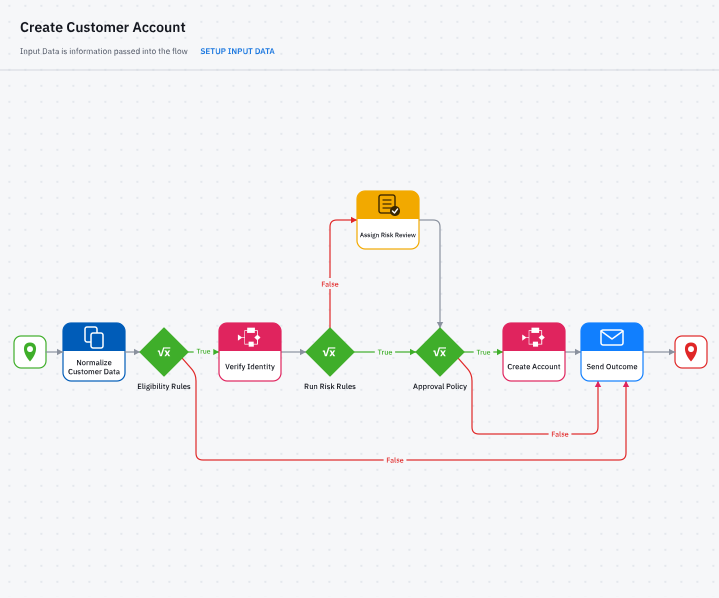
For teams weighing Appian competitors, here's where each platform stands, row by row.
✅ Strong | 🟠 Partial or different approach

Model complex logic with many rule types and visual Rule Chains, rather than linking decision tables through expression rules.
✓ Matrix Rules, Rule Tables, Truth Tables, and more
✓ Each rule's result feeds the next

Every rule has its own testing, version history, and audit trail, so policy updates move fast without risk.
✓ Rule-level debugging and unit tests
✓ Instant rollback to any checkpoint, plus Rule Audit History

Gartner® Critical Capabilities for Decision Intelligence Platforms, 2026
Gartner® Magic Quadrant™ for Decision Intelligence Platforms, 2026
Book a demo focused on the decisions and workflows your teams handle today.
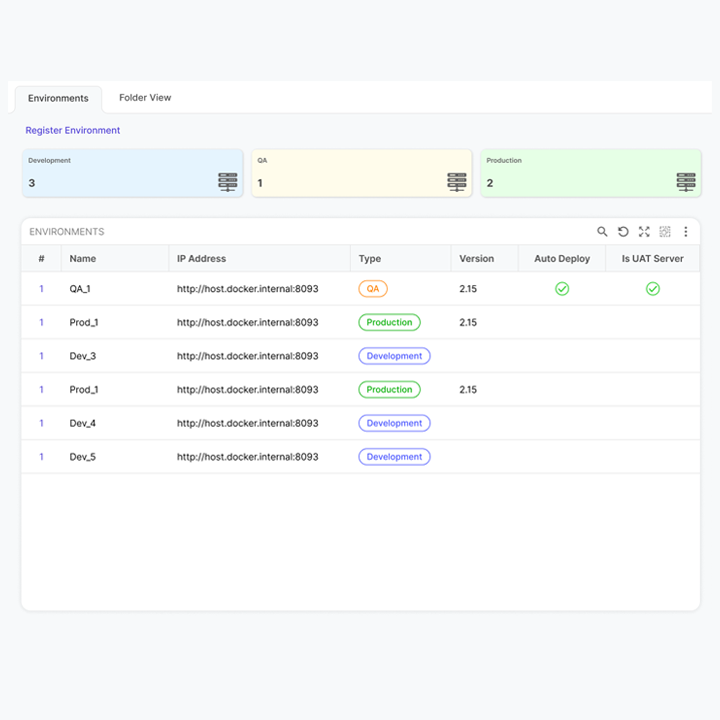
Every release in one view
IT tracks project versions and deployments across environments from a single place, and controls who can change what.
Agents that follow your rules
AI agents collect information, draft work, and suggest next steps within orchestrated processes. Your business rules set their limits.
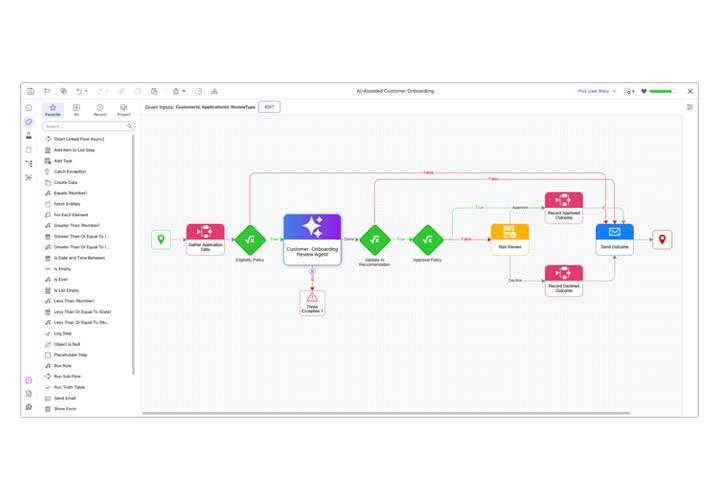
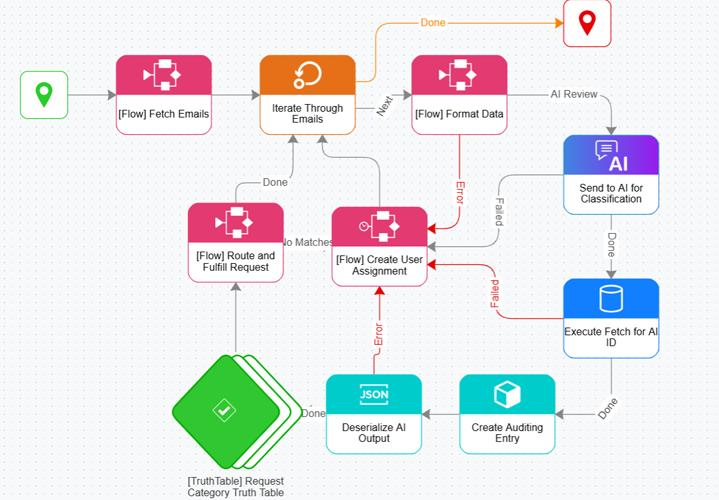
Rules, workflows, and forms together
Business experts and IT design logic, workflows, forms, and integrations side by side, using drag-and-drop tools and ready-made modules.
“Business people can develop small automation projects without involving programmers.”

Decisions and Appian both have long track records running complex, enterprise-scale processes. The real difference lies in the teams each platform serves.
Yes. Appian handles business logic with decision tables and expression rules. Decisions is built around a dedicated rules engine with many rule types, visual Rule Chains, and governance for every rule change, so it fits processes where complex rules change often.
Decision tables work well for single lookups. When logic spans many conditions and steps, Decisions adds Matrix Rules, Rule Tables, and Rule Chains that pass results from one rule to the next, all built and tested visually.

Or bring us your process in the Possibility Lab.
Process and task mining show how work really happens, from system events down to individual tasks, and predictive models turn those findings into Rule Tables.
✓ Process and task mining in one platform
✓ Findings become rules you can deploy
Across insurance, financial services, and more
ISO 27001 · SOC 2 Type 2 · HITRUST · PCI DSS
Yes. Rules are created and updated in visual editors without code, and each rule can be tested on its own before release. IT keeps control over who edits, approves, and publishes changes.
Yes. Decisions workflows assign tasks to people, route approvals, and handle escalations, all configured in the flow designer. If case management is the center of your applications, Appian's Case Management Studio is purpose-built for it.
Appian and Decisions both place agents inside governed processes. In Decisions, your business rules set each agent's boundaries, and sensitive actions pause for a person to approve. Try it with one of your own processes in the Possibility Lab.

