Connect business rules to the work they govern. Decisions brings visual rules, workflows, integrations, and user-facing forms into one automation environment, so your team can build the process around the decision, not just the decision itself.
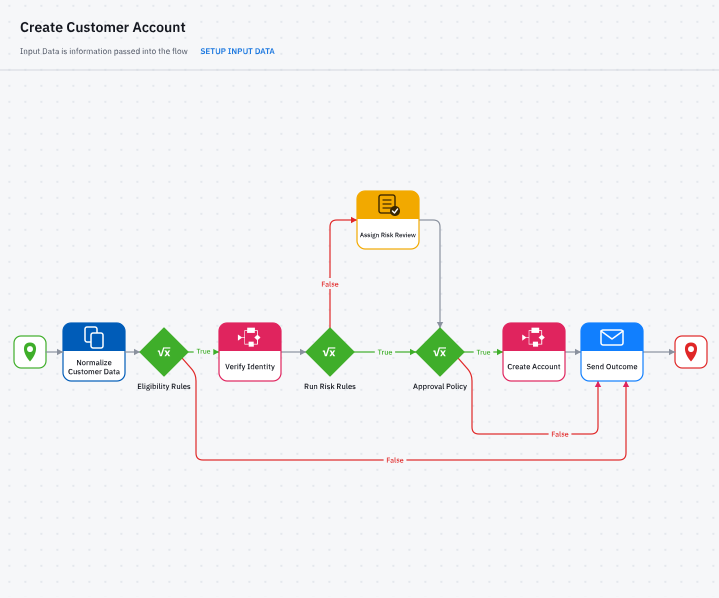
Both platforms support business rules and decision automation. The key question is how each fits your full process, your team, and your existing technology.
✅ Strong | 🟠 Partial or different approach

A rule determines what should happen. Decisions helps build what happens next, from collecting information to routing a review and updating another system.
✓ Connect rule outcomes directly to workflow steps and system actions
✓ Keep forms, decision logic, and review paths in one visual environment

Give business and IT teams a shared view of how policy shapes a process. Visual rules and workflows help stakeholders understand the logic and see where a change affects the work.
✓ Review business rules alongside the workflow that use them
✓ Collaborate on policy logic while IT manages integrations and deployment

Choose an InRule alternative based on the process you need to deliver. With Decisions, you can evaluate rules, workflows, forms, and integrations together using a representative business scenario.
✓ Demonstrate the journey from incoming data to a decision and follow-up action
✓ Assess the required capabilities, implementation effort, and operating costs for your full use case
Gartner® Critical Capabilities for Decision Intelligence Platforms, 2026
Gartner® Magic Quadrant™ for Decision Intelligence Platforms, 2026
Across insurance, financial services, and more
ISO 27001 · SOC 2 Type 2 · HITRUST · PCI DSS
Evaluating an InRule alternative? Bring a real decision scenario. See how Decisions can connect the rule, the review step, and the system update in one visual solution.
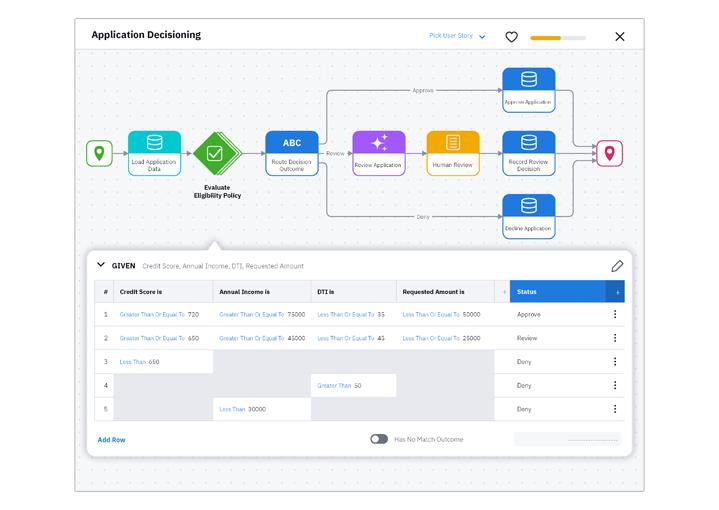
Turn business policy into the next action
Build rules alongside the workflows that use them. Connect policy logic to forms, review steps, and system updates so your team can see how a decision shapes the process.
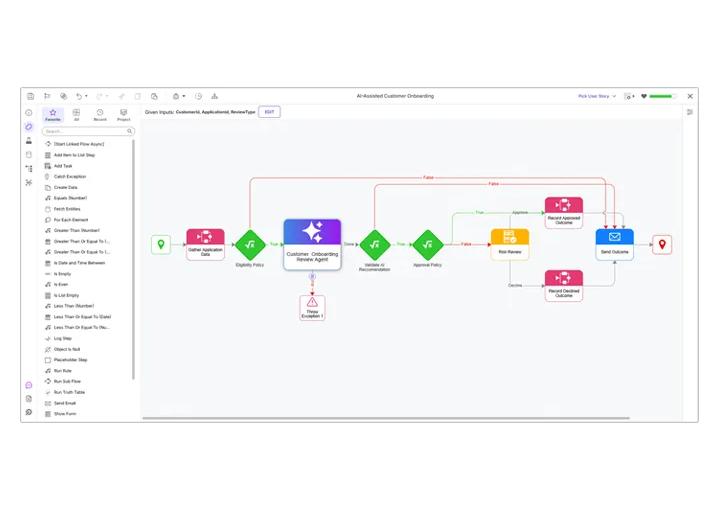
Connect AI capabilities with rules and human review
Make AI part of a defined business process. Connect external AI models with business rules and review paths to determine how their outputs are used and what happens next.
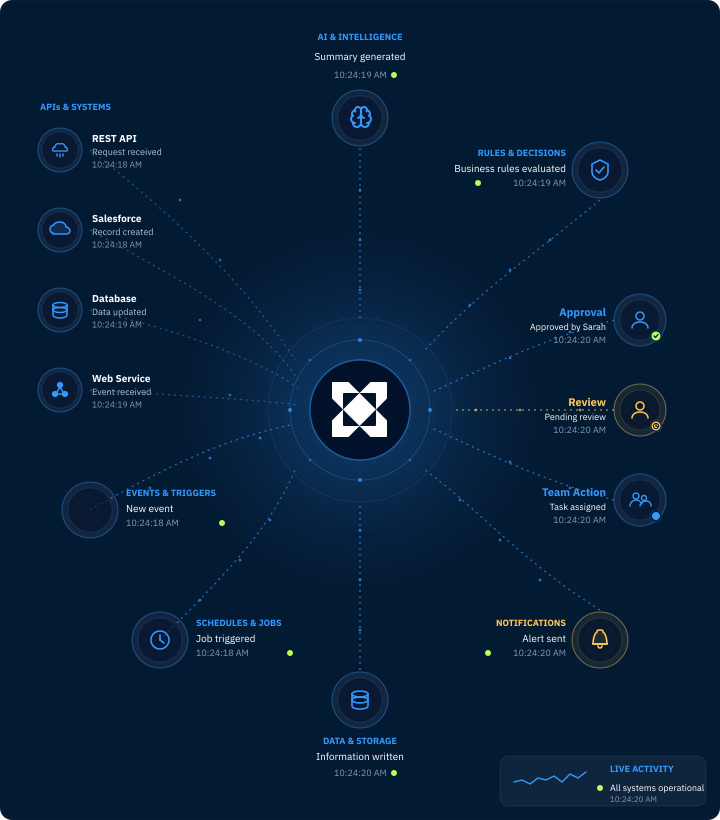
Coordinate the people and systems needed to finish the work
An answer is only one step in a business process. Use Decisions to connect data collection, decision logic, review tasks, and follow-up actions in one visual environment.
“Decisions offers much more functionality than rules: flows, forms, integrations. This makes it possible to completely encompass business logic within, and implement complete working code modules without coding.”
Mid-Market company

A useful InRule alternative should fit your architecture and the way your team delivers change. Compare the complete solution, not just a rules engine on one side and an entire portfolio on the other.
If you have a complex process that you want to try building on Decisions, bring it to our Possibility Lab to get a feel of how the platform works.
Decisions is an option for teams that need business rules connected to complete operational processes. Its visual environment brings rules, workflows, forms, and integrations together, helping teams define both the decision and the actions that follow.
You can build processes that collect information, evaluate rules, route work for review, and update connected systems. This lets your team automate the work before and after a decision not just return an answer.
Visual rule and workflow design gives business stakeholders and technical teams a shared view of policy logic and process behavior. Business teams can contribute their expertise, while IT handles technical requirements such as integrations, security, and deployment.
Decisions supports APIs and integrations that connect rules and workflows with enterprise systems, applications, and data. During evaluation, confirm the connections, authentication requirements, and data flows needed for your specific process.
Decisions can integrate external AI models into workflows and connect their outputs with business rules and human-review steps. This helps your team define how AI is used, when a person should review a result, and what action follows.

Bring a process you're evaluating, and we'll show you how it runs on Decisions.

