Decisions combines visual business rules with workflows that fetch additional data, transform inputs, and calculate values after a request arrives. Bring data preparation and rule execution into the same platform, rather than requiring calling applications to assemble every input upfront.
See how Decisions and IBM ODM compare across core capabilities, from business rules and governance to workflow automation, integrations, and deployment.
✅ Strong | 🟠 Partial or different approach

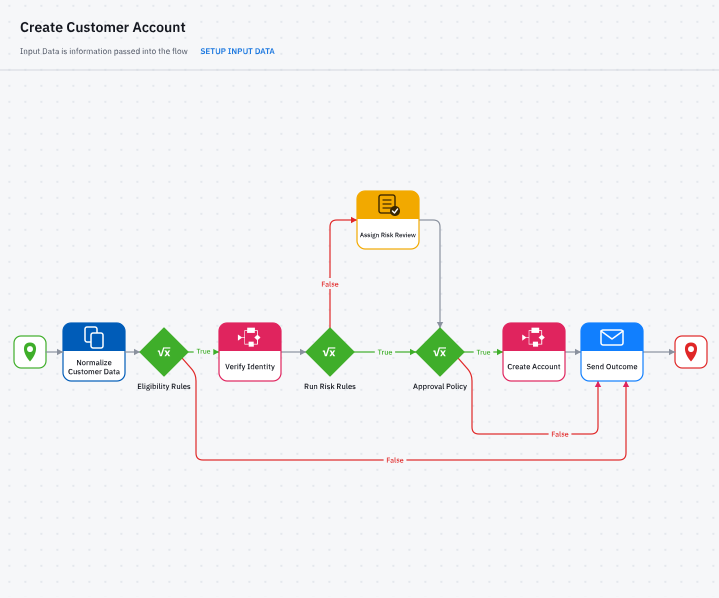
Put rules in the context of the work they govern. Coordinate workflows, approvals, exceptions, and external systems from one visual platform.
✓ Trigger workflows and route work from business rules
✓ Manage approvals, exceptions, and operational actions in the same process

Build and update rules visually, so business and technical teams can work together without making every change a specialized development project.
✓ Use low-code, visual rule and workflow design
✓ Enable business user collaboration with governed change controls
Gartner® Critical Capabilities for Decision Intelligence Platforms, 2026
Gartner® Magic Quadrant™ for Decision Intelligence Platforms, 2026
Looking for an IBM ODM alternative that can combine rules, workflows, integrations, approvals, and operational automation in one visual environment?
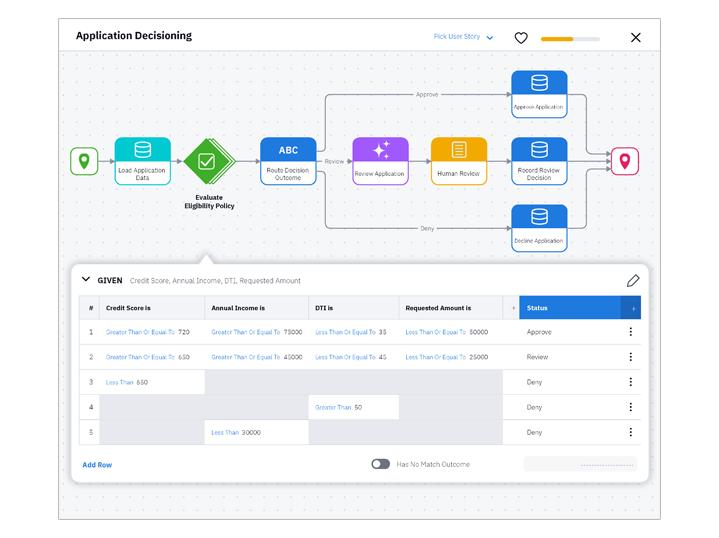
Let the workflow gather what the decision needs
When a rule needs more information, fetch it from connected systems and prepare it within Decisions. Keep data retrieval, transformations, calculated values, and rule execution together instead of pushing every data requirement back to the calling application.
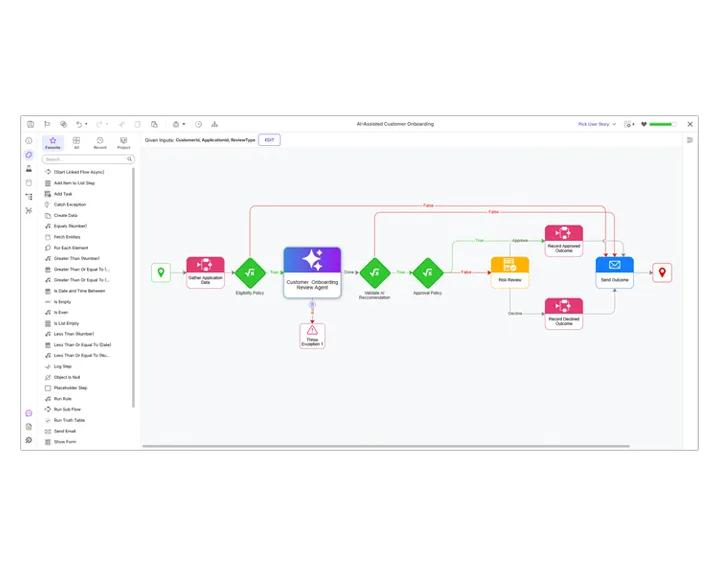
Put AI to work with business rules in control
Use AI within orchestrated processes while keeping rules, data, and human review connected to each step. Decisions can help teams generate rules from policy documents and expose governed workflows as reusable tools for AI enabled operation.
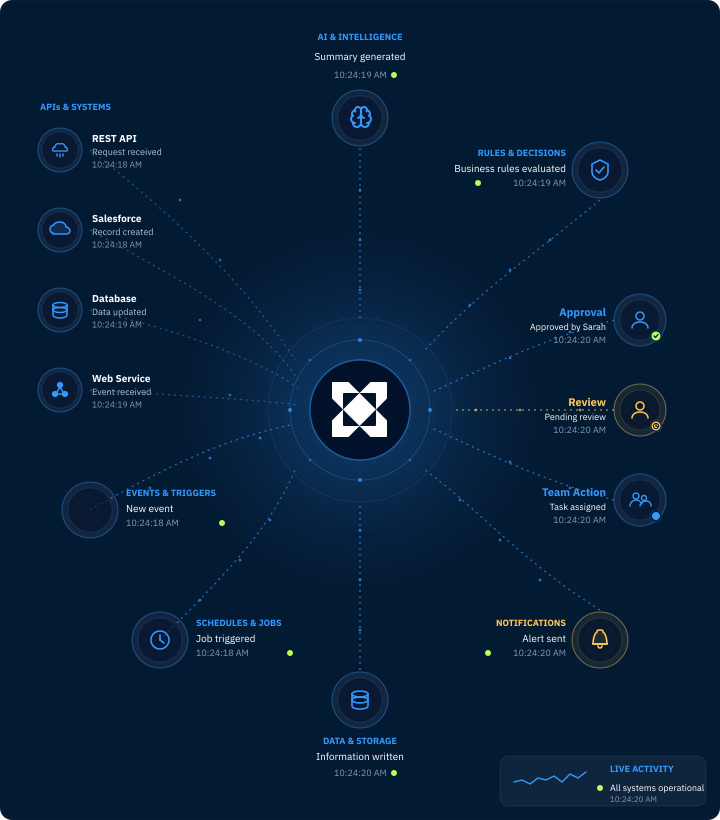
Coordinate people, systems, and exceptions
Automate what happens before, during, and after a decision. Route work to the right person, call the right system, manage exception, and keep the process moving from one platform.
“Decisions offers much more functionality than rules: flows, forms, integrations. This makes it possible to completely encompass business logic within, and implement complete working code modules without coding.”
Mid-Market company

Decisions and IBM ODM are enterprise platforms with strengths for governed decisioning. The right choice depends on whether your main need is a specialized rules management environment or a broader automation platform where business rules are one part of the overall process.
If you have a complex process that you want to try building on Decisions, bring it to our Possibility Lab to get a feel of how the platform works.
A good IBM ODM alternative depends on what you need beyond rule execution. Decisions is a strong option for organizations that want to combine business rules with visual workflows, enterprise integrations, task routing, approvals, and tailored automation solutions in one platform.
Both platforms support business rules, business friendly rule authoring, decision tables, governance, versioning, audit support, and controlled deployment. Decisions differentiates through its visual, low-code approach and its ability to apply rules within end-to-end process automation.

Bring a process you're evaluating, and we'll show you how it runs on Decisions.

Fetch and prepare additional information inside the workflow, rather than requiring the calling application to supply every value upfront.
✓ Retrieve data from connected systems after a request arrives
✓ Transform inputs and calculate values before evaluating rules
Across insurance, financial services, and more
ISO 27001 · SOC 2 Type 2 · HITRUST · PCI DSS
Decisions can be considered as an IBM ODM replacement when your priorities include rule authoring combined with workflows, integrations, business applications, human task management, and process orchestration.
Yes. Decisions supports branches, releases, change and validation activities, permissions, controlled production deployment, audit support, and rollback. For a detailed feature-level comparison with an existing ODM governance model, validate the specific requirements for rule-level testing, traceability, and approval controls during the sales or technical evaluation.
Not necessarily. A configured Decisions workflow can receive an initial request, retrieve additional information from connected systems, transform the data, calculate values, and then evaluate rules. This means the calling application does not always need to assemble every decision input in advance. The appropriate request structure depends on your integrations, security requirements, and performance needs.

