Decisions combines your policies, data, and AI to make consistent, explainable decisions at scale, then puts them to work in the workflows that run your business.
Trusted by organizations running complex, high-stakes operations.






Ranked in the top five across all four evaluated use cases Gartner® Critical Capabilities for Decision Intelligence Platforms report 2026.*
A decision intelligence platform is software that helps organizations model, automate, and govern business decisions made by people or systems. It combines data, business rules, analytics, and AI to execute decisions at scale, then monitors outcomes so decision quality can be measured and improved.
Gartner predicts that by 2027, 50% of business decisions will be augmented or automated by AI agents for decision intelligence. As more decisions move to machines, the logic behind each one matters as much as the outcome.
(Gartner, 2025)

Decisions platform handles the whole decision, not just the rule in the middle.

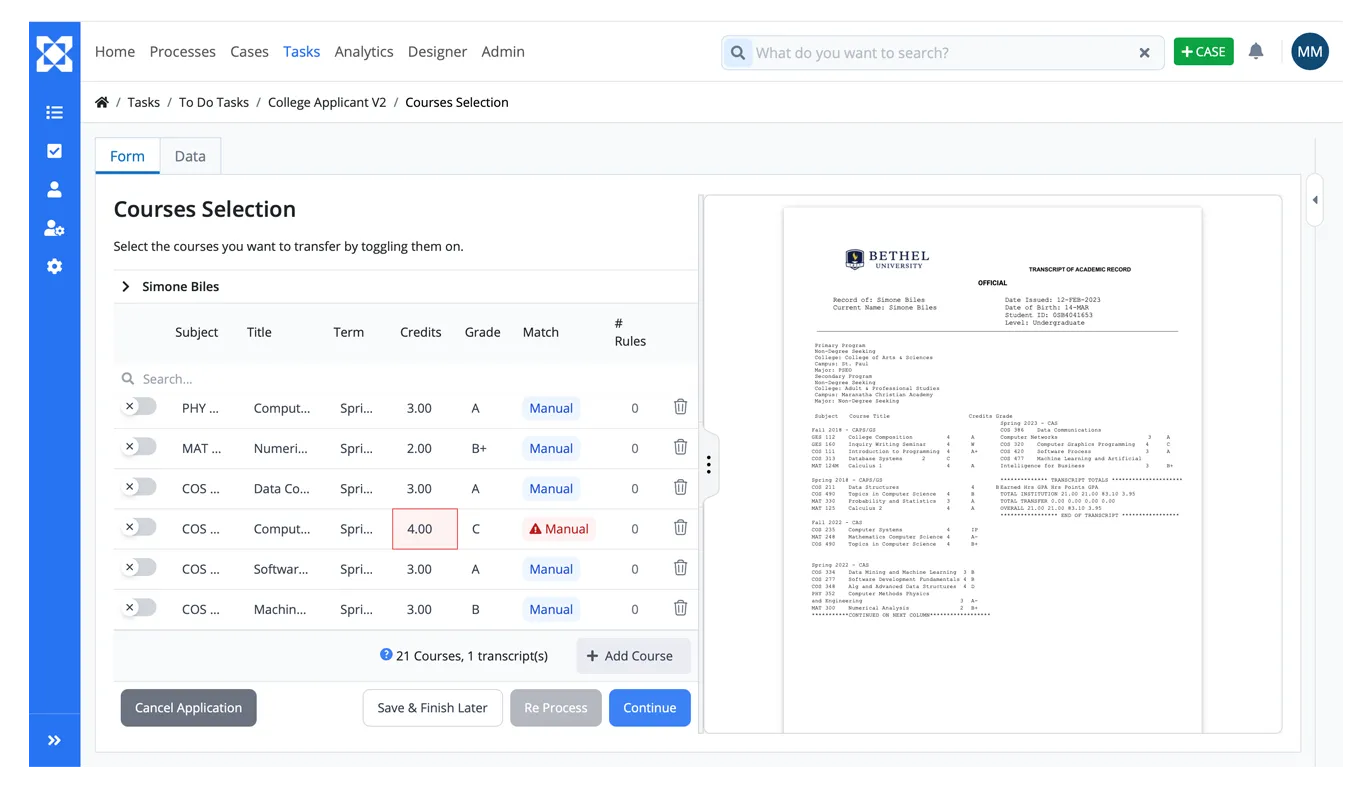
Pull inputs from core systems, APIs, documents, and event streams.

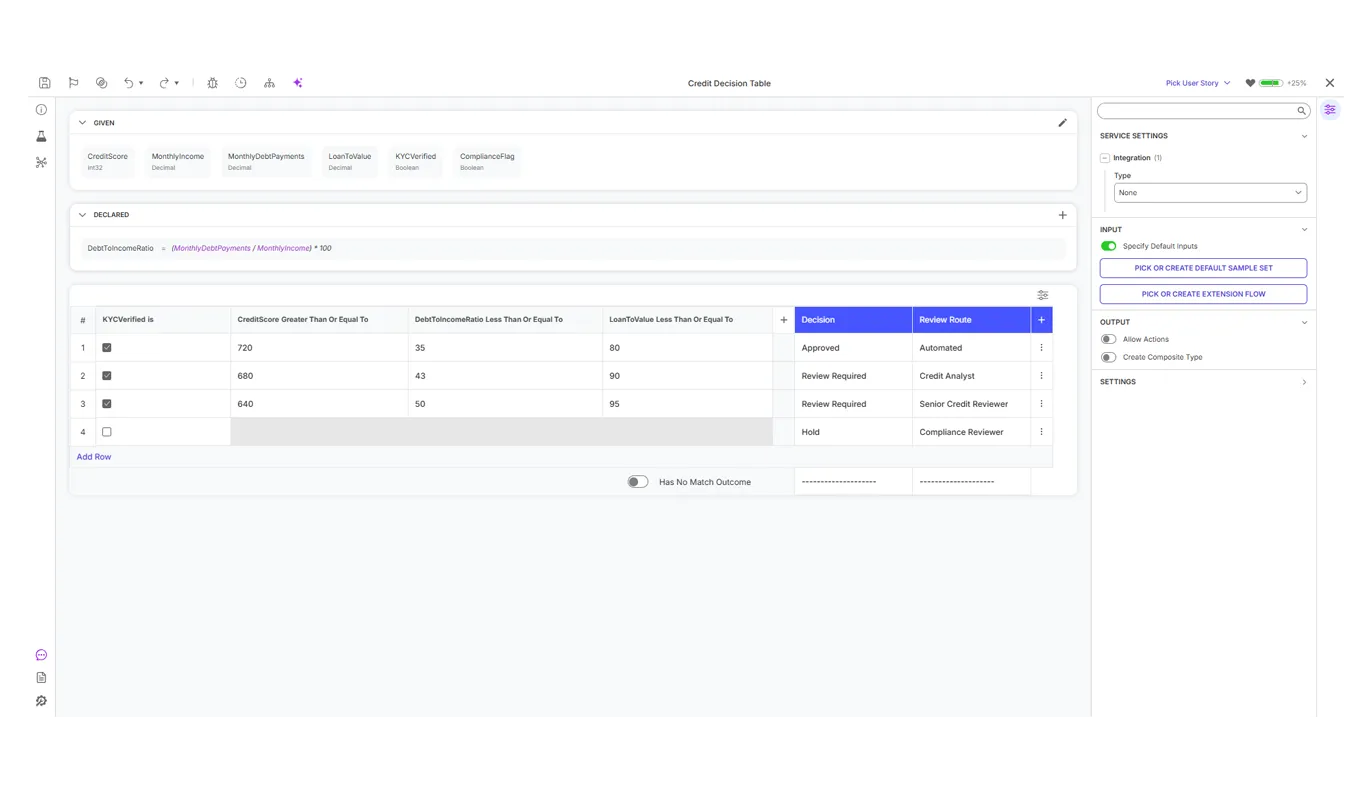
Decision tables, rule chains, and predictive models evaluate each case against your policies, then return an appropriate outcome.

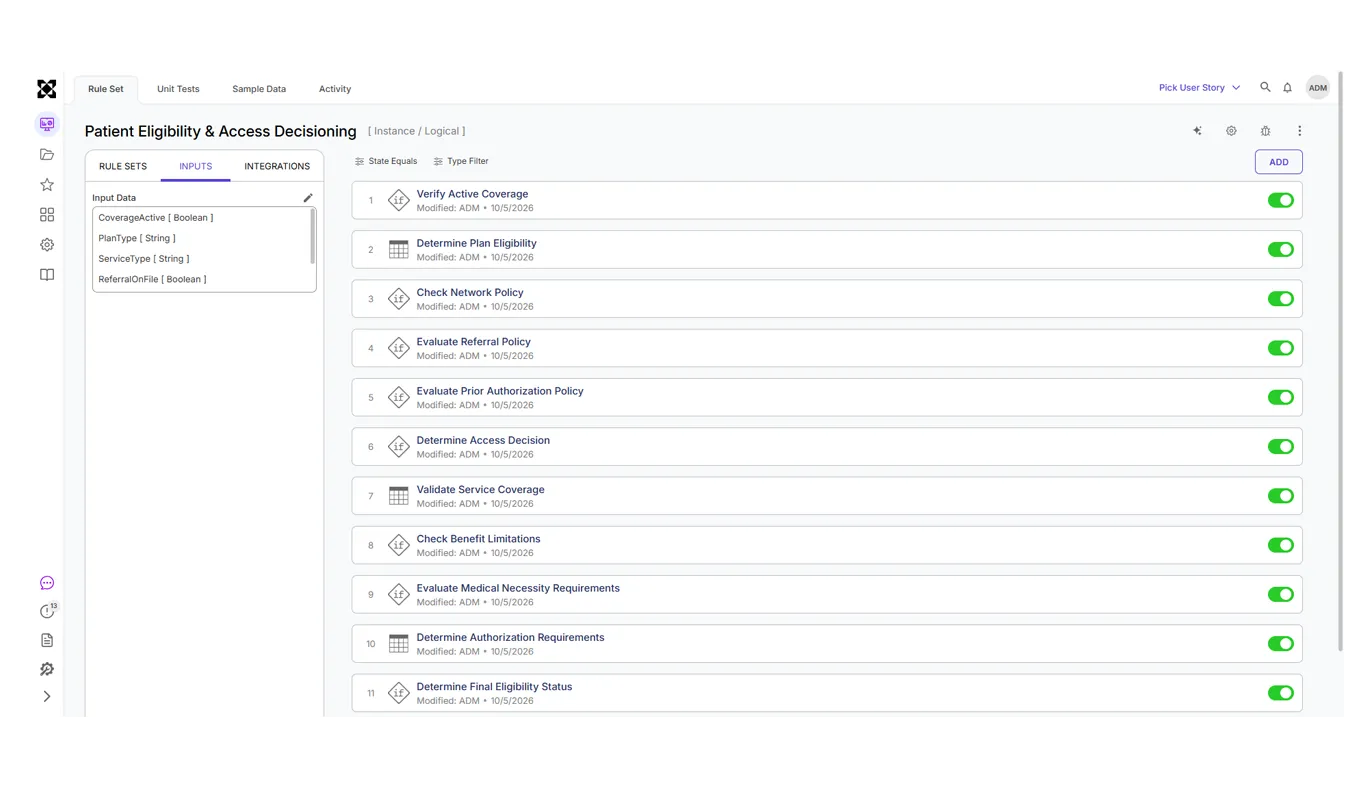
Build decision tables, truth tables, flowcharts, rule chains, and predictive models in visual editors. Every rule is versioned and testable.

Test changes before release, compare versions side by side, and roll back when needed.
Pick the process with the most rules, exceptions, and handoffs. Try it in Decisions and see how decisioning handles it.
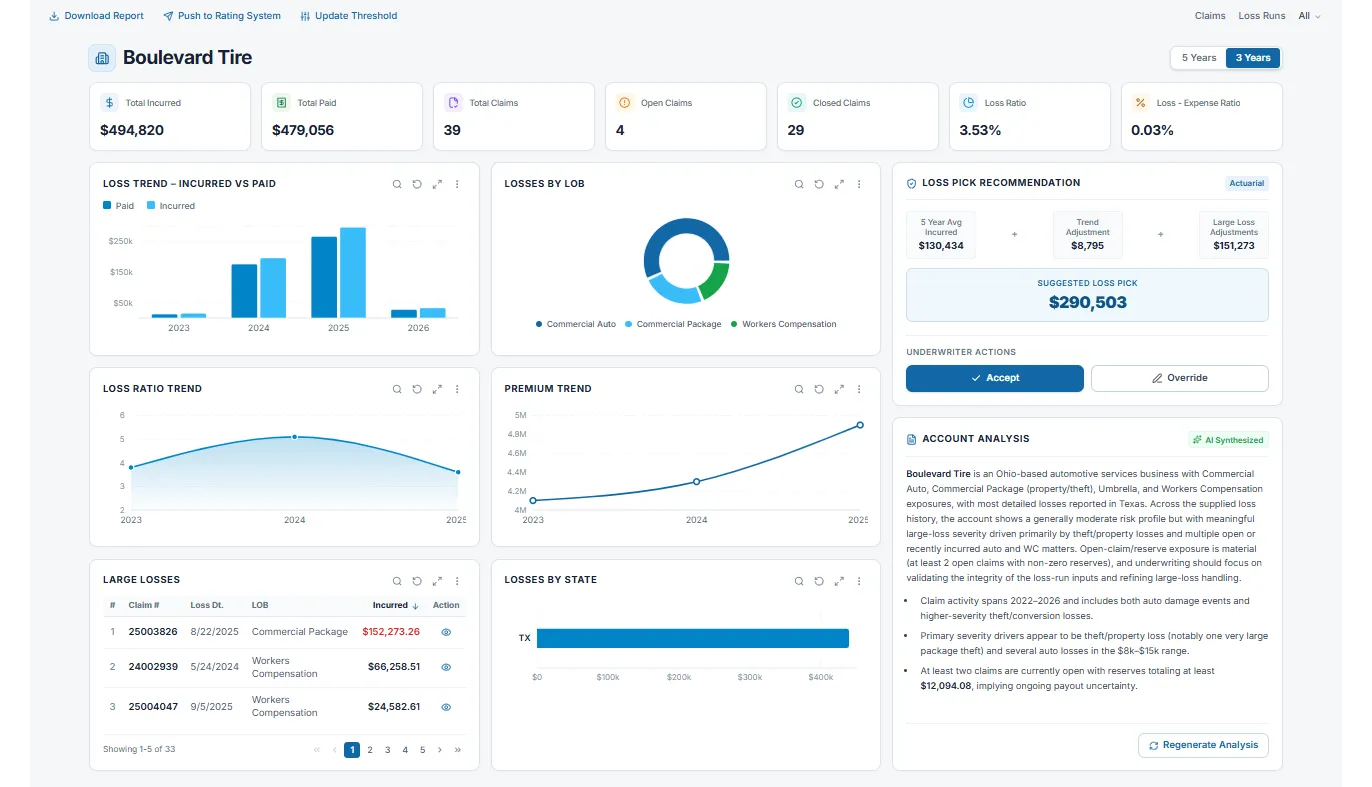
Automate underwriting eligibility, claims triage, subrogation, and loss run analysis with rules your adjusters and auditors can read.


“The strongest of Decisions’ capabilities are real-time event stream processing, decision modeling, decision execution and decision collaboration, which help organizations productize high-value use cases as applications.”
Critical Capabilities for Decision Intelligence Platforms, Carlie Idoine, David Pidsley, Kevin Quinn, Gareth Herschel, Kjell Carlsson, 27 January 2026


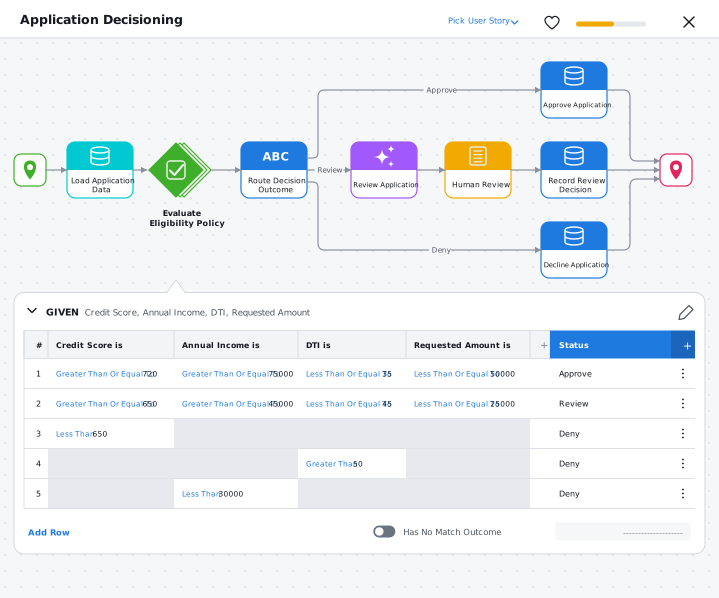
Rules and workflows are built in the same studio and deployed together. There is no handoff between a decision engine and a separate BPM tool, so decisions drive action immediately.

Subject-matter experts and business users update logic in visual, plain-language editors. IT keeps control of approvals and deployment.

Decision intelligence is the broader discipline of designing, automating, and governing decisions with data, analytics, and AI. Decisioning is its operational core: running those decisions reliably inside live business processes, one case at a time.
Business intelligence reports what happened, and people decide what to do next. Decision intelligence makes or recommends the decision itself, applies it consistently, and records the logic behind every outcome.

Bring us a decision your team makes today. We'll show you how Decisions automates it, explains it, and acts on it.
*Gartner does not endorse any specific vendor, product, or service mentioned in its research publications. It does not recommend that technology users exclusively choose vendors with the highest ratings or other distinctions. Gartner’s research publications reflect the opinions of its research team and should not be interpreted as factual statements. Gartner disclaims all warranties, express or implied, related to this research, including warranties of merchantability or fitness for a particular purpose. Gartner is a registered trademark and service mark of Gartner, Inc. and its affiliates, both in the United States and internationally. Magic Quadrant is a registered trademark of Gartner, Inc. and/or its affiliates, used herein with permission. All rights reserved.

The outcome triggers the next workflow step: a system update, a document request, or a human review.

Dashboards track outcomes against your KPIs, so you can see where logic needs to change.

Decision governance is built in: see which rule fired, with what data, and why, with every action logged automatically for audits.

Run decisions on streaming events as they happen or in scheduled batches.

Use models from providers such as OpenAI, AWS Bedrock, Anthropic, and others, and switch between them by task.
Rules decide when AI acts, when a person reviews, and how outputs are validated. Through the Decisions MCP server, AI agents call governed workflows as tools, so they stay within your compliance and audit policies.
Look for decision modeling that business users can work in, real-time and batch execution, a full record of why each outcome happened, controls over how AI is used, and the ability to act on decisions inside your workflows rather than only returning a score.
AI handles tasks like reading documents, scoring risk, or summarizing cases. Unlike AI decision-making software that lets models act on their own, Decisions uses rules to set the boundaries: which AI outputs are accepted, when a human reviews, and what happens next.
Yes. Decision tables and flowcharts let the people who own a policy change it directly, and every change is tested and approved before it goes live.


© 2026 Decisions