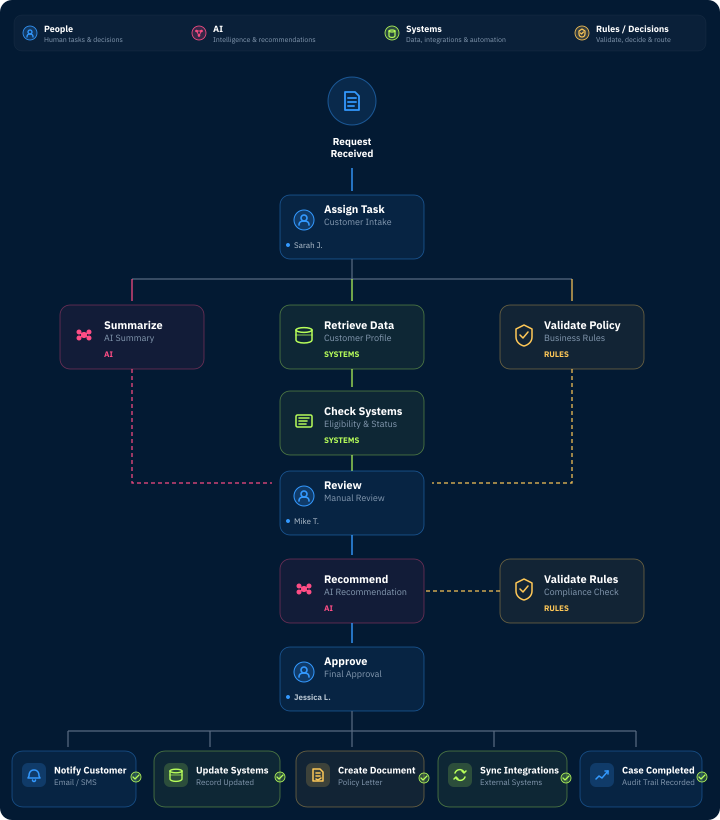
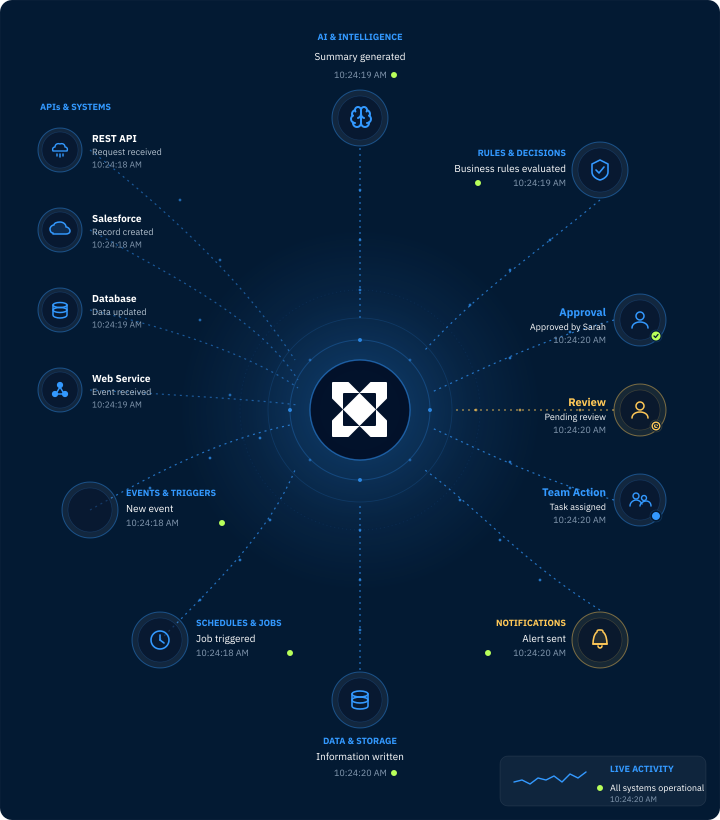
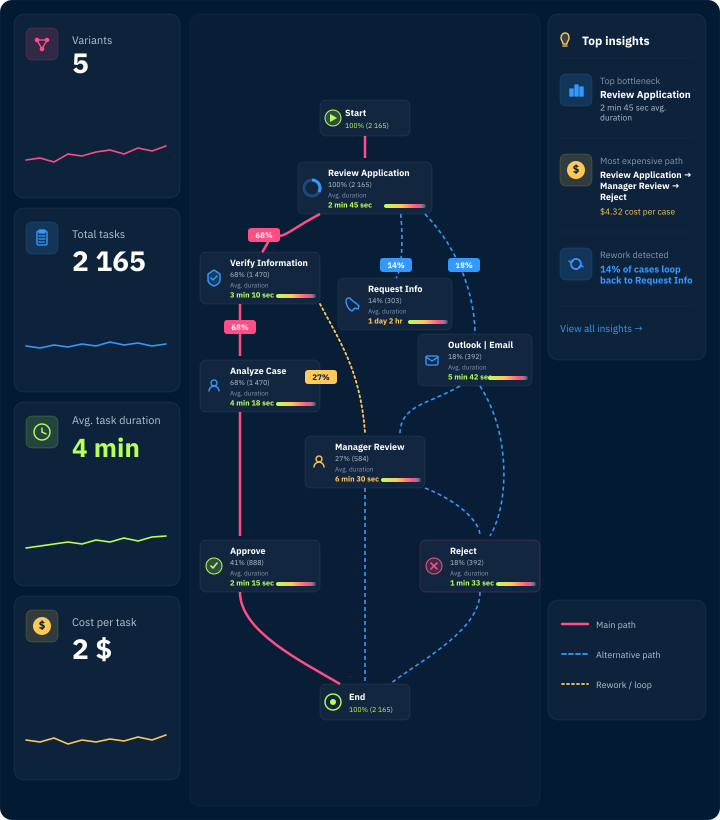
Decisions replaces custom-built workflow tools with a low-code workflow platform that connects workflows, business rules, AI, and existing systems.

Homegrown workflow tools solve immediate needs. But as processes become more complex, maintaining custom code can slow updates, strain development resources, and make business rules harder to manage.

Adapting workflows requires coding, testing, and deployment cycles that delay critical updates.

Business rules are embedded in code, making it difficult to enforce consistency across processes.
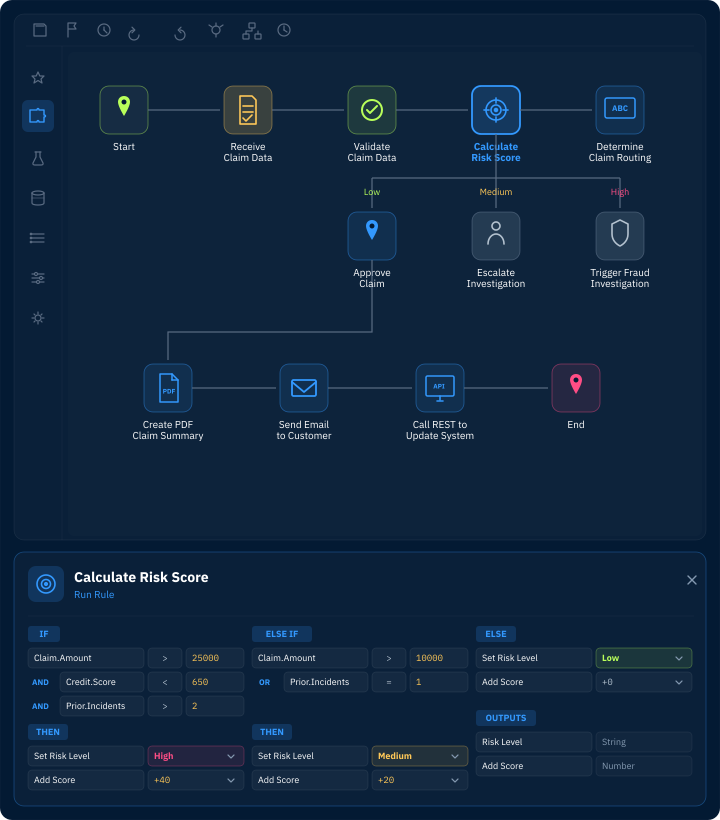
Decisions brings workflows, business rules, AI, and integrations into one low-code workflow platform. Teams can build and update processes visually, reuse logic, and connect existing systems without hard-coding every change.
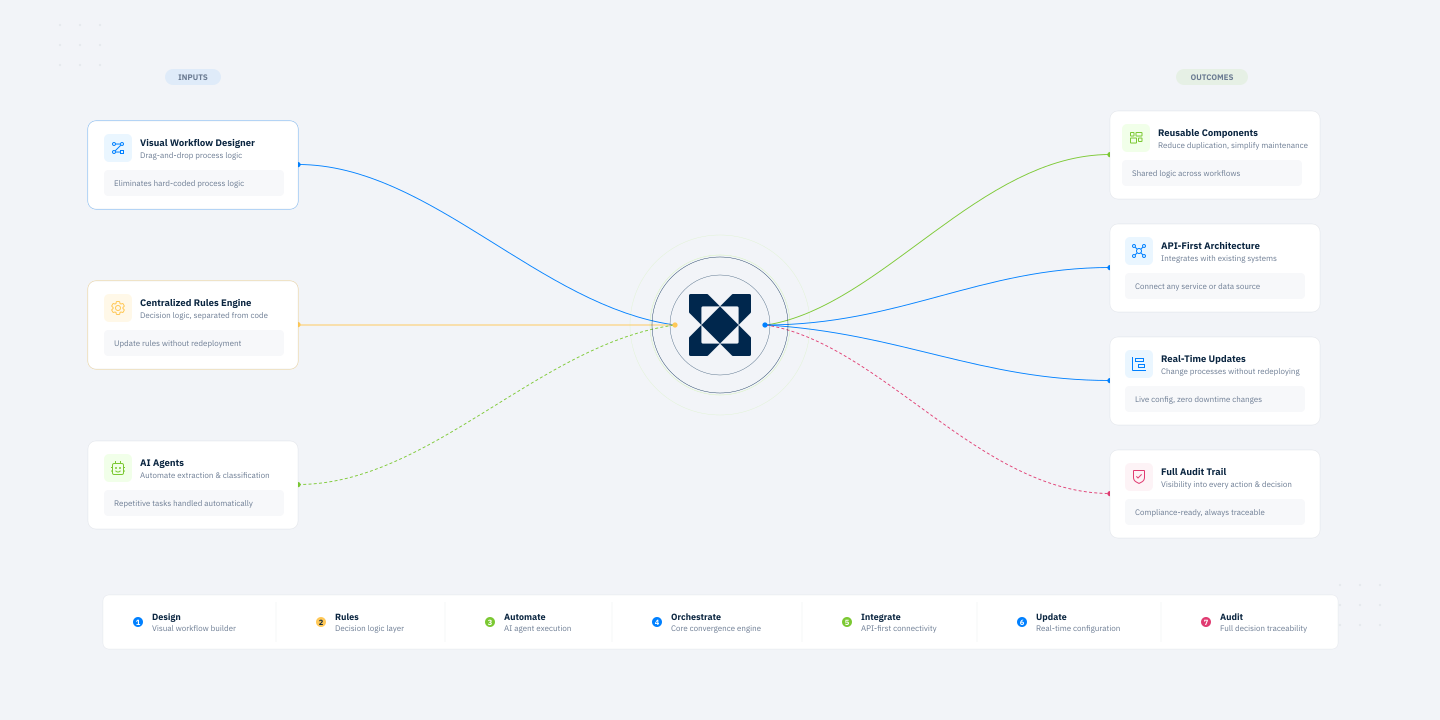
Replacing homegrown tools with a low-code workflow platform helps teams update processes faster, manage business rules consistently, and reduce the burden of maintaining custom workflow code.


A unified platform designed to run your business—No silos, No handoffs, No guesswork.

Model and execute complex logic with an enterprise rules engine








“Decisions enables us to deliver completely visual workflow and business rules process management solutions for any business.”

A low-code workflow platform lets teams build, automate, and update business processes using visual tools and reusable components rather than writing every step in code. Decisions combines visual workflow design with business rules, integrations, and orchestration to support complex processes across people, systems, and AI.
When every change requires a developer, only a few people understand how it works, or the tool struggles to scale, it is likely creating more risk than value.

See how Decisions’ low-code workflow platform helps you replace custom-built tools with visual workflows, centralized business rules, and connected systems.

Adding AI, integrations, or new capabilities often requires reworking the foundation—not just extending it.


No. You can move to a low-code workflow platform in phases, starting with the workflows that create the most maintenance burden, risk, or operational friction. Decisions can connect to existing systems while you replace individual homegrown tools over time.
Yes. Decisions integrates with existing systems, APIs, databases, and services so you can modernize workflows without disrupting the broader technology stack.
Decisions uses visual workflow design, centralized business rules, and reusable components to reduce the amount of custom code teams need to build and maintain. Teams can update workflow steps and business logic without hard-coding every change.
Yes. Decisions lets you add AI agents, rules, and orchestration into governed workflows, helping teams automate more without losing visibility or control.