Decisions brings enterprise workload automation, workflow orchestration, and business rules together in one low-code platform. Schedule jobs or trigger them from events, connect the systems they touch, and track every run, delay, and failure from one view.
Named in the 2026 Gartner Magic Quadrant for Service Orchestration and Automation Platforms.
Across insurance, financial services, and more
A workload automation platform runs the jobs that keep IT and the business moving, including data loads, file processing, system checks, and reports. Decisions builds each automation as a visual workflow with business rules inside it, so the same platform runs the job, evaluates the result, and takes the next step.

Create automations in a low-code visual designer. Each one is a reusable flow you can schedule, trigger from an event, or call from another process.

Execute jobs on a schedule or on demand. Dependencies between steps live in the flow itself, so the order of work is visible and versioned.
Decisions supports jobs that run on a set schedule and jobs that start automatically when an event occurs.

Set automations to run every few minutes, nightly, monthly, or on another defined schedule. Automated job scheduling reduces the manual kickoffs and run-book checklists that slow operations teams down.

Start jobs from API calls, incoming data, form submissions, or a step in another workflow. Work begins when the triggering event occurs, rather than waiting for a predefined time.

Bring jobs scattered across scripts and server task schedulers into one enterprise scheduler that IT can see and govern. Decisions keeps each schedule connected to its execution history and underlying automation, allowing teams to trace a job from its configuration to its latest result without switching tools.
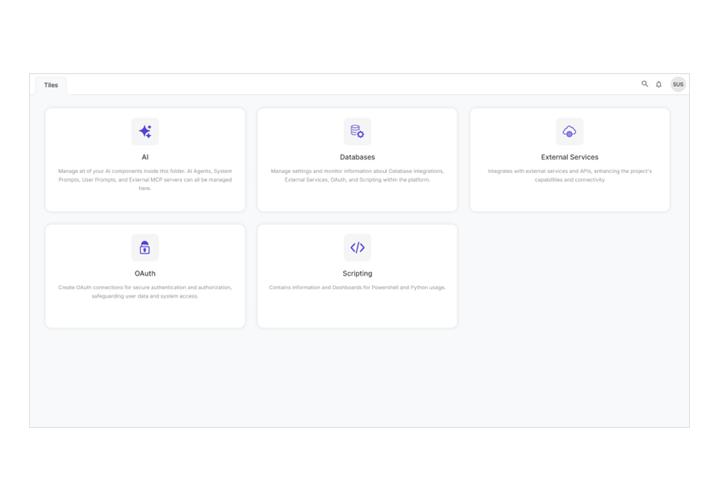
Workload orchestration coordinates jobs that span applications, databases, cloud services, and more. Decisions handles the handoffs. One workflow can pull data from a database, call an external API, apply rules, ask an AI model to classify a document, and write the result back to your ERP, with every step logged.

Integrate through REST and SOAP web services, direct database connections, and prebuilt connectors. Decisions expanded its SAP automation and data management capabilities in 2026 through the acquisition of Configurable Management.

Deploy on-premises, in containerized Kubernetes environments, or as a fully managed single-tenant SaaS on Microsoft Azure. Hybrid deployment gives organizations greater control over where automations run and where their data resides.
This is service orchestration and automation in practice: one workload orchestration layer that schedules, connects, decides, and monitors across hybrid and cloud environments.
IT workload automation takes routine work off your operations team: the maintenance tasks, batch runs, and scaling operations that must happen reliably but should not require a person to initiate them.

Schedule log cleanup, disk and service health checks, and backup verification. When a check fails, native logging and configured alerts can notify the appropriate team.

Run nightly data loads, bulk record updates, file processing, and report generation as scheduled batches. Rules can validate output before it moves downstream, and teams can generate run reports for defined reporting periods.
Decisions was named a Niche Player in the 2026 Gartner Magic Quadrant for Service Orchestration and Automation Platforms, its first year in the report.*
Decisions brings three key capabilities to service orchestration and automation:

Workflow automation, integrations, and business rules in one low-code visual studio, so business technologists can build and maintain complex logic without heavy developer involvement.

Interchangeable AI providers within a workflow, plus governed workflows exposed to AI agents through an MCP server, keeping agents within compliance, audit, and human-in-the-loop policies.
“Whenever we acquire a company (which has happened several times over the past couple of years), we need to bring together different ERP systems and business processes. Decisions has helped us standardize customer creation, harmonize master data, and establish a repeatable playbook for faster integration, allowing us to operate as one consolidated business more quickly.”
PrimeSource Building Products

Workload automation uses software to schedule, run, and monitor IT and business jobs across systems with minimal manual intervention. It includes time-based jobs, event-triggered jobs, and the dependencies between them.
Workflow automation coordinates the steps in a business process, often including people, forms, decisions, and approvals. Workload automation primarily schedules and orchestrates system-level jobs such as data loads, file processing, and batch operations. Decisions supports both within one platform.

Bring a job your team runs today, whether a nightly batch, a system check, or a multistep handoff across applications. We’ll show you how Decisions can schedule the job, orchestrate the systems involved, and track each run from start to finish, with workload automation, business rules, and workflows in one platform.
*Gartner does not endorse any specific vendor, product, or service mentioned in its research publications. It does not recommend that technology users exclusively choose vendors with the highest ratings or other distinctions. Gartner’s research publications reflect the opinions of its research team and should not be interpreted as factual statements. Gartner disclaims all warranties, express or implied, related to this research, including warranties of merchantability or fitness for a particular purpose. Gartner is a registered trademark and service mark of Gartner, Inc. and its affiliates, both in the United States and internationally. Magic Quadrant is a registered trademark of Gartner, Inc. and/or its affiliates, used herein with permission. All rights reserved.
ISO 27001 · SOC 2 Type 2 · HITRUST · PCI DSS
On-premises, Kubernetes, or single-tenant SaaS on Azure

Apply business rules to each job’s output. Route exceptions to a person, update records, or start the next job using consistent, governed logic.

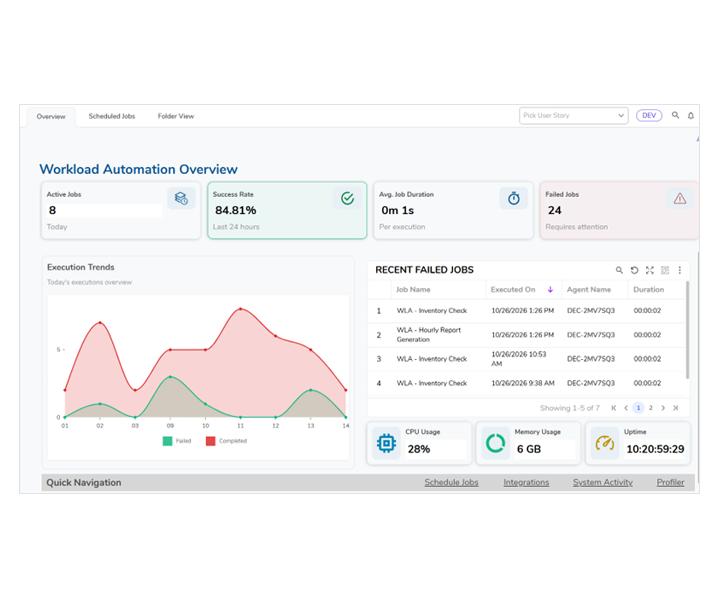
Track success rates, run durations, delays, and failures in one dashboard. Drill into any execution to view its error details and the automation behind it.
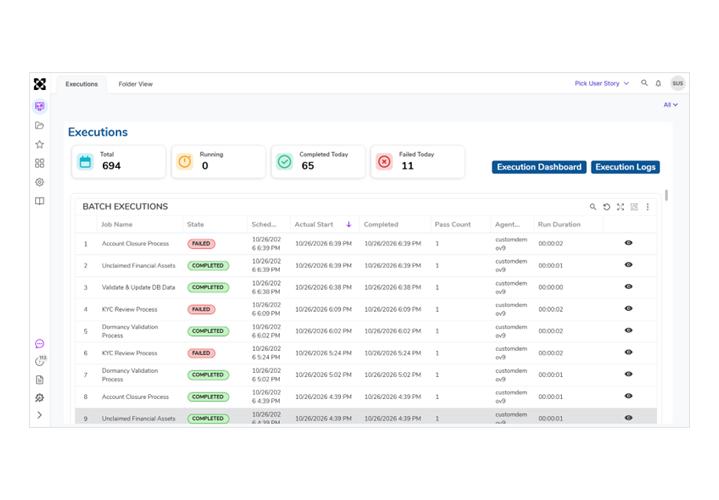
Every run records its scheduled time, actual start, duration, and outcome. When a job is late or fails, open the run to compare scheduled and actual times, review the error details, and access the underlying automation.

Switch between AI providers such as OpenAI, AWS Bedrock, Google Vertex AI, and Anthropic for each task with the AI Common module. The Decisions MCP server exposes governed workflows as tools that AI agents can call while remaining subject to defined approvals, audit trails, and human review steps.

Run Decisions in containerized Kubernetes environments and scale capacity as job volume grows. Trigger containerized services through their APIs and track their activity as part of the broader workflow execution.

Mainframe automation in Decisions runs through standard integrations: REST and SOAP web services and direct database connections.

A fully managed single-tenant option on Azure with strict data isolation and control over where data resides.
Each execution can record its scheduled time, actual start, duration, and outcome. Failed or delayed runs can be surfaced through dashboards and configured alerts, with execution details available for investigation.
Decisions can orchestrate mainframe-related workloads through REST or SOAP web services and database connections. However, it does not provide native mainframe execution agents, so organizations may continue using their existing mainframe scheduler for core batch processing while using Decisions to orchestrate processes across mainframe, distributed, and cloud systems.
On-premises, in containerized Kubernetes environments, or as a fully managed single-tenant SaaS on Microsoft Azure.
