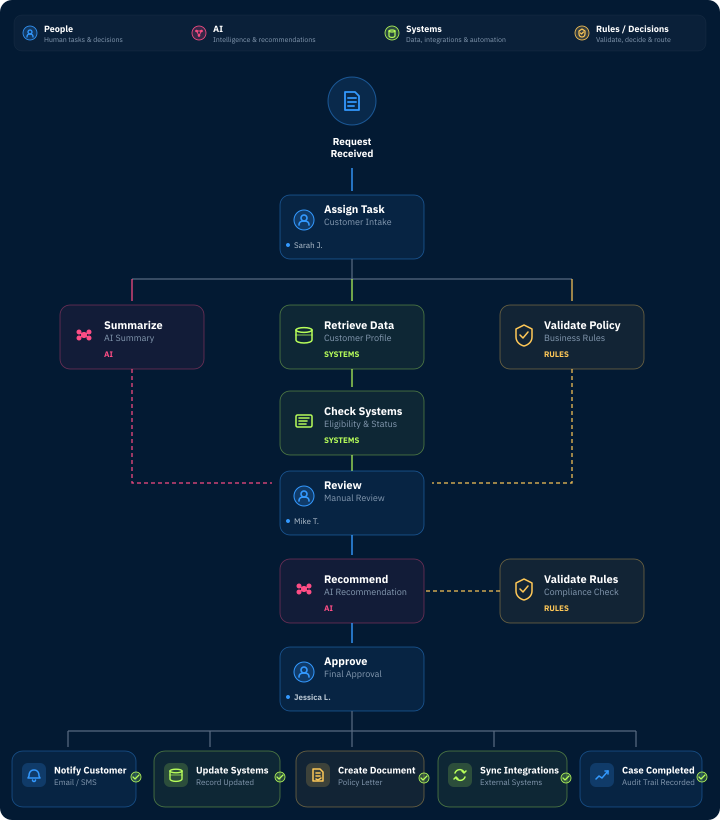
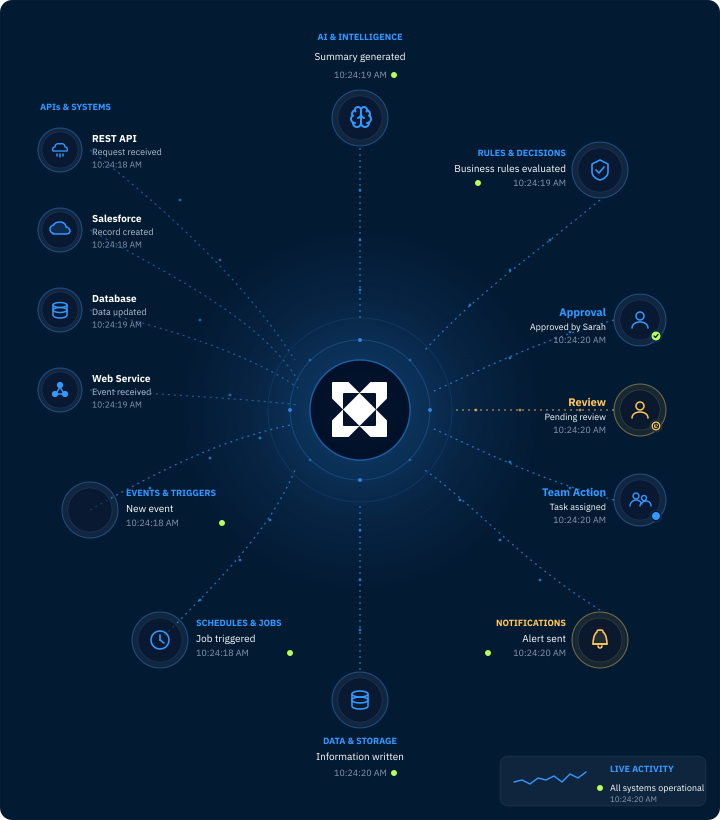
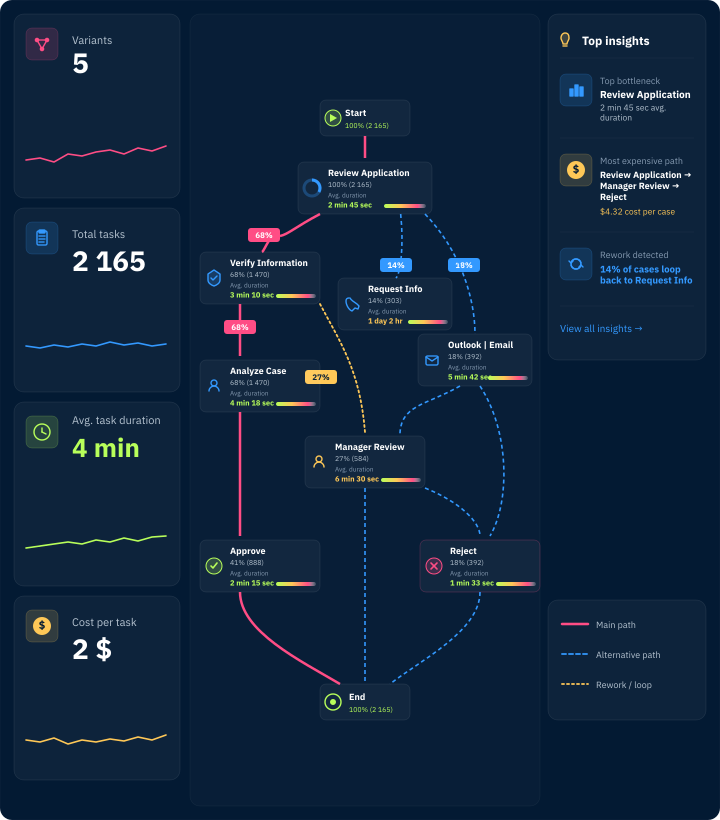
Replace rigid process technology with Decisions’ low-code BPM software. Coordinate workflows, business rules, integrations, and AI while supporting governed change across your existing systems.

A BPMS that once streamlined operations can become harder to maintain as requirements change. Long release cycles, difficult integrations, and limited visibility can prevent teams from improving the processes that depend on it.

Workflow and rule changes depend on specialized development, making updates slower and harder to manage.

Connecting newer applications, APIs, and AI services requires workarounds that increase maintenance.
Decisions gives you a more flexible way to automate and orchestrate work across people, systems, data, decisions, and agents.
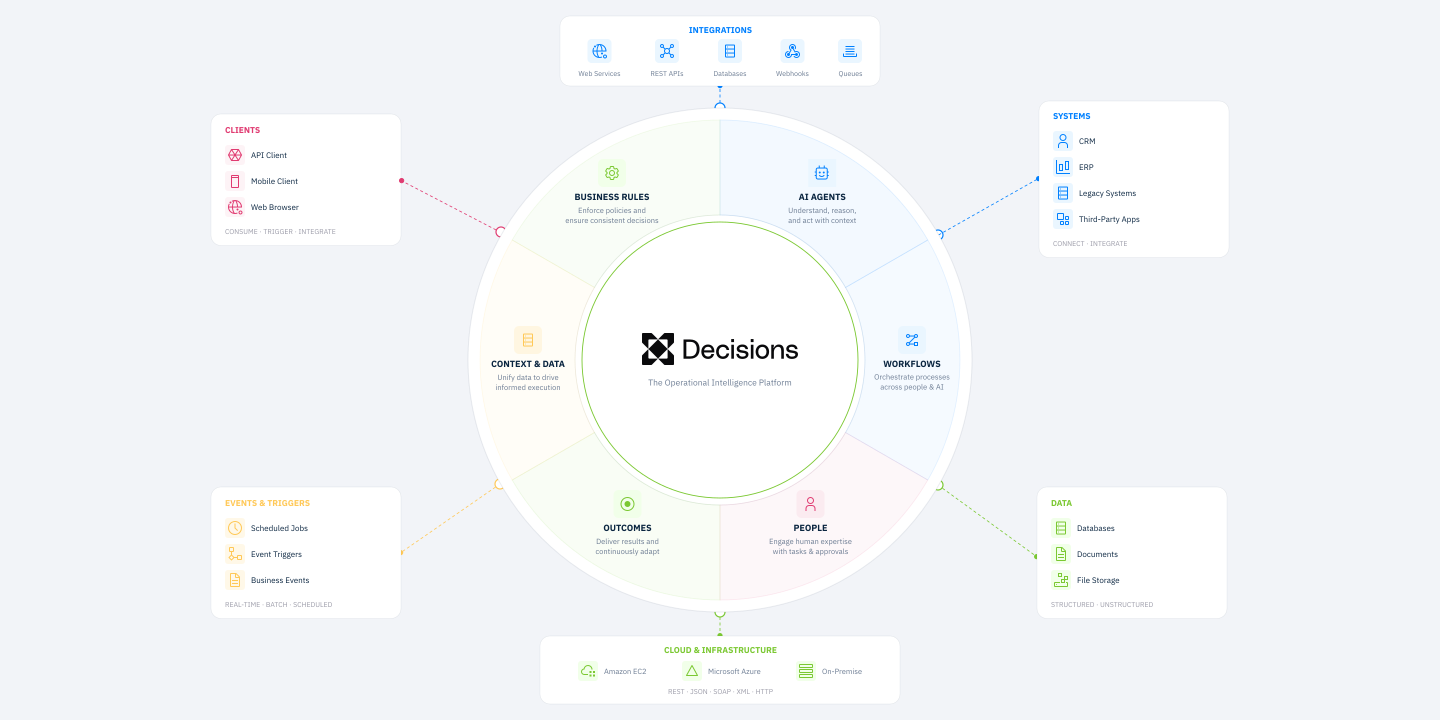
Look beyond workflow execution. Evaluate how your next platform manages decision logic, connects systems, supports long-running work, and governs changes across the process.


A unified platform designed to run your business—No silos, No handoffs, No guesswork.

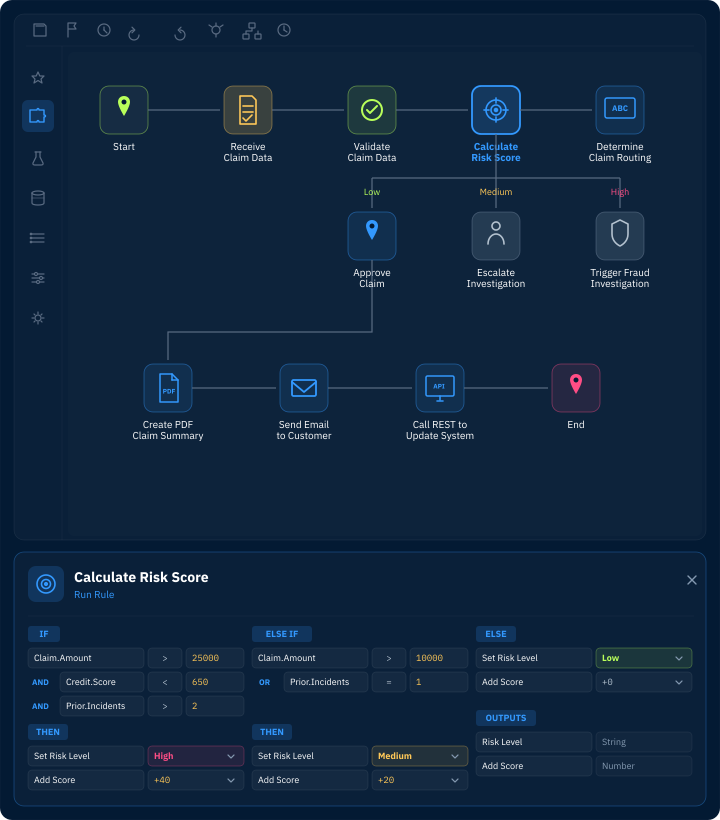
Model and execute complex logic with an enterprise rules engine








“Based on our experience of investing in the Decisions platform to improve our workflow and process automation, we don't see bottlenecks anymore. We see problems that Decisions can solve.”
City of Miami Parking Authority

BPM software, or business process management software, helps organizations design, execute, monitor, and improve business processes. Decisions combines workflows, business rules, integrations, and orchestration to coordinate work across people and systems. Explore its business process management capabilities for a broader platform overview.
No. Decisions can work alongside existing systems so teams can modernize selected processes in phases. The appropriate approach depends on process dependencies, data, integrations, and operational requirements. A phased plan helps teams test changes before expanding the replacement.

See how Decisions helps you modernize process automation with a flexible platform that enforces decisions, and scales with your business.

Process improvements are constrained by the platform rather than guided by business needs.


Yes. Decisions supports connections to legacy and modern systems through available interfaces. Its application integration capabilities help teams coordinate processes across existing applications, with the implementation depending on the access and connectivity each system provides.
Visual workflow and rule design can let authorized business and operations teams make many process changes without writing custom code. IT and developers still support security, integrations, complex requirements, testing, and deployment oversight.
AI can support tasks such as document extraction and classification within a defined workflow. Business rules, validation, permissions, and human review govern how those outputs are used. Decisions’ AI governance capabilities help teams apply controls and maintain traceability.