


The Enterprise AI Shift
From Experiments to Orchestrated Intelligence
Early AI pilots delivered pockets of value but failed to scale. Learn what separates organizations achieving enterprise-wide AI transformation from those stuck in experimentation.Design solutions 3X faster, process unlimited rules per hour, and speed the growth of your business with Decisions low-code system.
More on the Decisions low-code platform.


Partners drive global growth with Decisions’ innovative low-code business solutions.


We’re building the world’s most capable and accessible Intelligent Process Automation platform.


Decisions provides webinars, docs, and training to support low-code process automation.


Gartner does not endorse any specific vendor, product, or service mentioned in its research publications. It does not recommend that technology users exclusively choose vendors with the highest ratings or other distinctions. Gartner's research publications reflect the opinions of its research team and should not be interpreted as factual statements. Gartner disclaims all warranties, express or implied, related to this research, including warranties of merchantability or fitness for a particular purpose. Gartner is a registered trademark and service mark of Gartner, Inc. and its affiliates, both in the United States and internationally.

What organizations learned from early AI deployments – and why models alone weren’t enough.

Why enterprises are shifting from fragmented pilots to unified BOAT platforms.

Expert forecasts on how enterprise AI will evolve.
Setting enterprise AI strategy, standardizing on platforms, ensuring AI delivers value without risk.
Designing technical foundation for AI – connecting models, agents, workflows, and rules.
Embedding AI into core processes, defining where automation acts vs. where humans intervene.
Ensuring AI decisions are repeatable, auditable, and aligned with regulatory requirements.
“By 2030, 70% of enterprises will adopt unified platforms that orchestrate business processes, AI agents, bots, APIs and human actions – up from just 5% today.”
Gartner
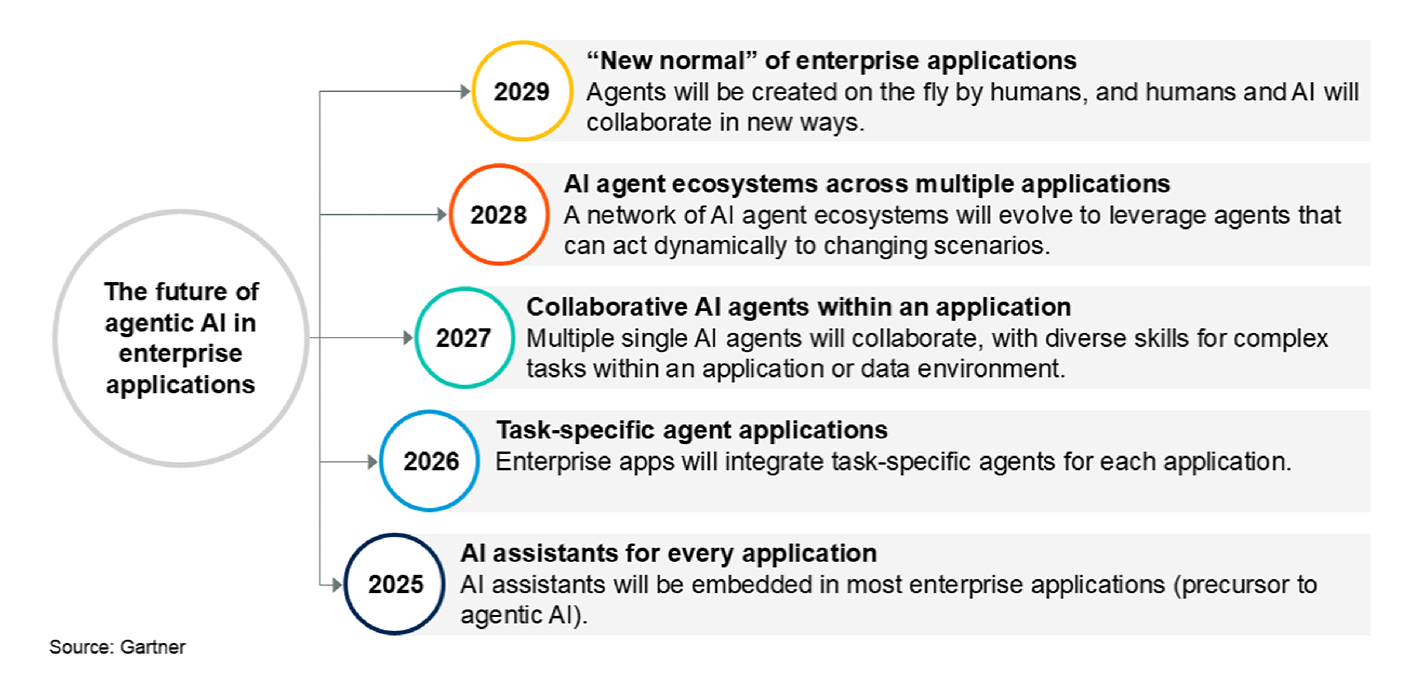
Get the complete framework for governed, orchestrated “AI – plus five predictions to guide your 2026-2030 strategy.

Lessons from first wave GenAI adoption, shift toward governance and orchestration, core priorities for AI maturity today, and five expert predictions for 2026-2030.
CIOs, CTOs, IT architects, heads of operations, and governance leaders responsible for AI at enterprise scale. Especially relevant for regulated industries.
Early pilots failed to scale because they ran in isolation. AI orchestration connects models, agents, and automation into a unified platform for consistent results.
Business Orchestration and Automation Technologies – Gartner’s term for platform unifying process design, rule management, workflow automation, and AI orchestration.
The guide includes ‘What This Means for Technology Leaders’ section with specific imperatives for standardizing on orchestration.
Yes, free to download. Provide name, company, and email for instant access to the full PDF.